


Hi Legends! 👋 Welcome back to another update from our Learning Universe. This October we’re adding three new K-8 math games that turn place value, factors, and proportional reasoning into missions students actually want to finish.
Rounding, factor pairs, and percent problems show up on every assessment calendar — but on a worksheet they rarely feel connected to anything real. These games put the math inside deliveries, factory floors, and live-event budgets so students practice the skill and see why it matters.
📚 If you missed our summer releases, revisit July’s elementary math games to explore recent titles.
New K-8 Math Games for October
Get ready to bring fresh energy into your classroom with these interactive math classroom games!
Grades 3–5
- Round and Deliver: Become a village postbot and round whole numbers to the nearest 10, 100, and 1,000 to deliver packages and newspapers to the right lockers and doorsteps.
- Robot Maths: The Factor Factory: Step onto the factory floor as Chief Engineer. Sort prime and composite cores, wire factor pairs, and catch multiples to repair runaway robots (aligned to 4.OA.B.4).
Grades 6–8
- The K Factor : Run the numbers behind a high-stakes livestream. Combine percentage and operation blocks to complete proportional equations — markdowns, interest, fees, and percent error included.
Play games for free →https://teachers.legendsoflearning.com/sign-up
🍎 Teacher Tip: Use these during centers, intervention blocks, early finisher rotations, or warm-ups before a place-value / factors / proportions lesson. After gameplay, ask students to explain one rule they used (e.g., “I looked at the ones digit”) — a fast way to check vocabulary and catch misconceptions.
The Classroom Problems These Games Target
Rounding (grades 3–5): Students often memorize “5 or up” without knowing which digit to check. Round and Deliver forces that decision on every package — wrong place value, wrong locker.
Prime, composite, and factor pairs (grade 4): Factor fluency falls apart when numbers get bigger or look “prime-ish” (51, 57, 91). Robot Maths spreads practice across three stations so students sort, pair, and chase multiples — not just fill a factor rainbow once.
Proportions and percent (grades 6–8): Percent of change, markdowns, and simple interest live in real budgets. The K Factor turns those calculations into time-pressured equation slots students must complete correctly to keep the stream alive.
Together, these K-8 math games give teachers standards-aligned practice without another stack of worksheets.
😎 A Closer Look at Our K-8 Math Games
These new math classroom games turn skill practice into interactive adventures students look forward to playing.
📬 Round and Deliver — Grades 3–5 Math
You’re Postbot for the day. Packages have delivery numbers that don’t match an exact locker — so students round to the nearest 10 to find the right zone. Later routes escalate to newspapers in high-rises (nearest 100) and wage payouts rounded to the nearest 10, 100, or 1,000.
What works for teachers: the rounding rule lives inside the job. In-game journals walk through ones / tens / hundreds digits, and wrong deliveries get immediate, friendly feedback instead of a red X on a worksheet.
Classroom ideas: Assign as a 10–15 minute center during a place-value unit · Use Stage 1 (nearest 10) as a warm-up, then Stage 2 for nearest 100 / 1,000 · Exit ticket: “Name the digit you checked when rounding 1,500 to the nearest 1,000.”
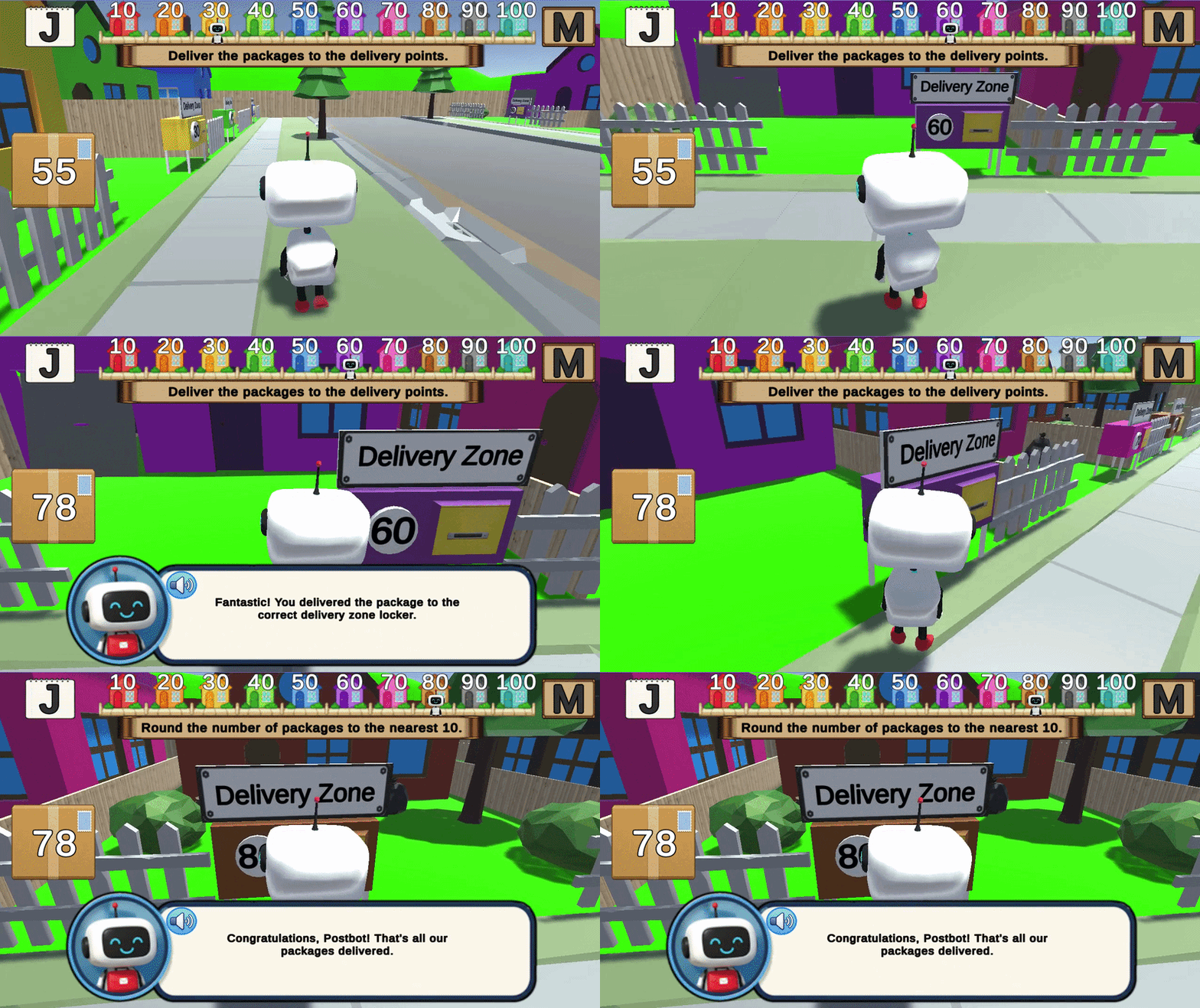
Grades 3–5 · Round Whole Numbers to Any Place
🤖 Robot Maths: The Factor Factory — Grades 3–5 Math
Students clock in as Chief Engineer across three stations: Sorting Gate (prime / composite / glitch), Wiring Loom (factor pairs), and Volt-Runner (multiples of a target number).
Difficulty tiers climb toward numbers 1–100, with a built-in multiplication matrix and hints that teach (not just say “try again”). It’s factor fluency with enough variety that students don’t burn out after five problems.
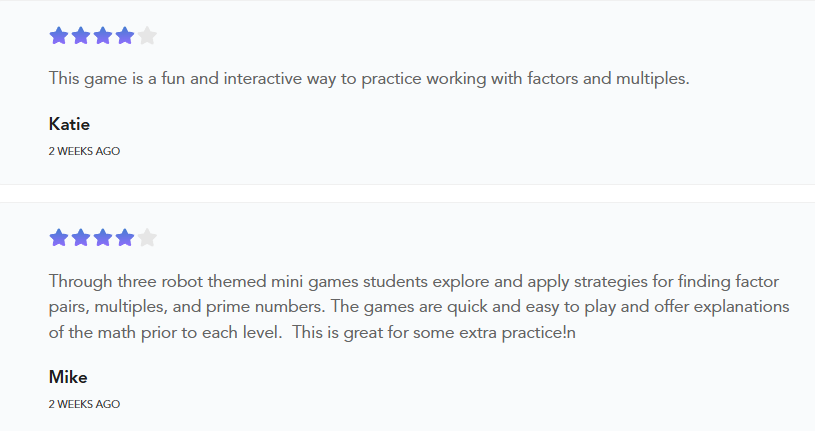
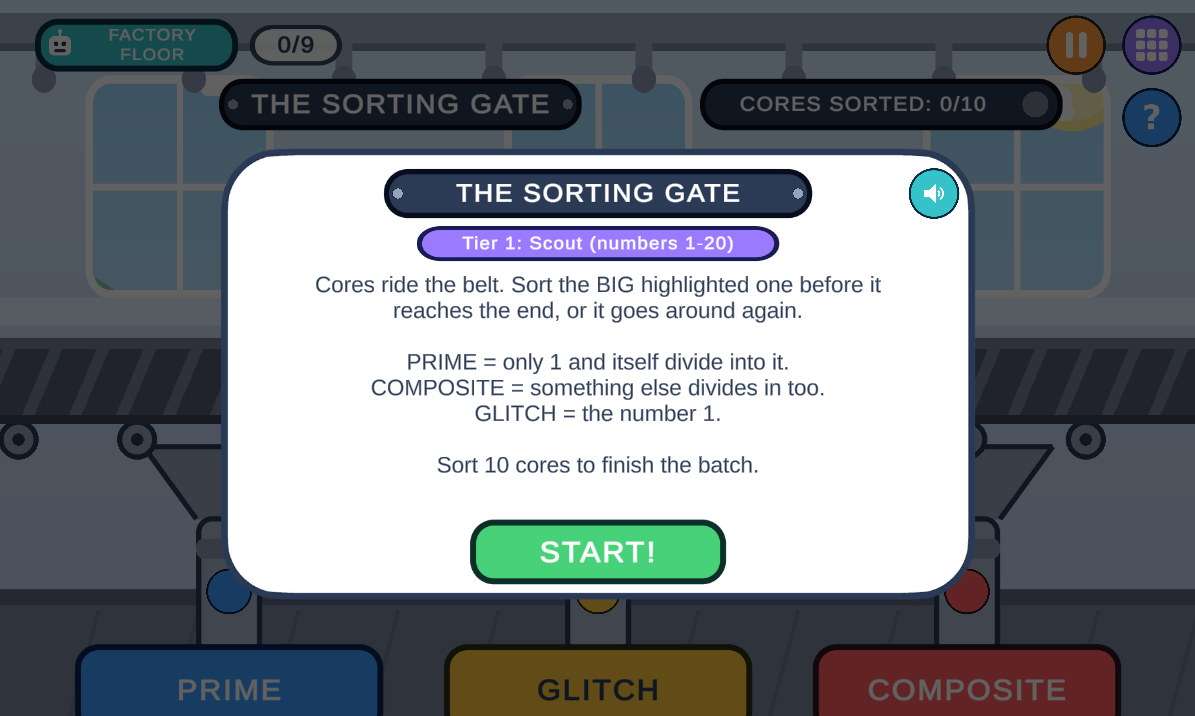
Grades 3–5 · Prime, Composite, and Factor Pairs · Aligned to CCSS 4.OA.B.4
Classroom ideas: Assign one station per day during a factors week · Use Sorting Gate as a quick formative check on prime vs. composite language · Challenge early finishers to clear a higher tier before the period ends.
📡 The K Factor — Grades 6–8 Math

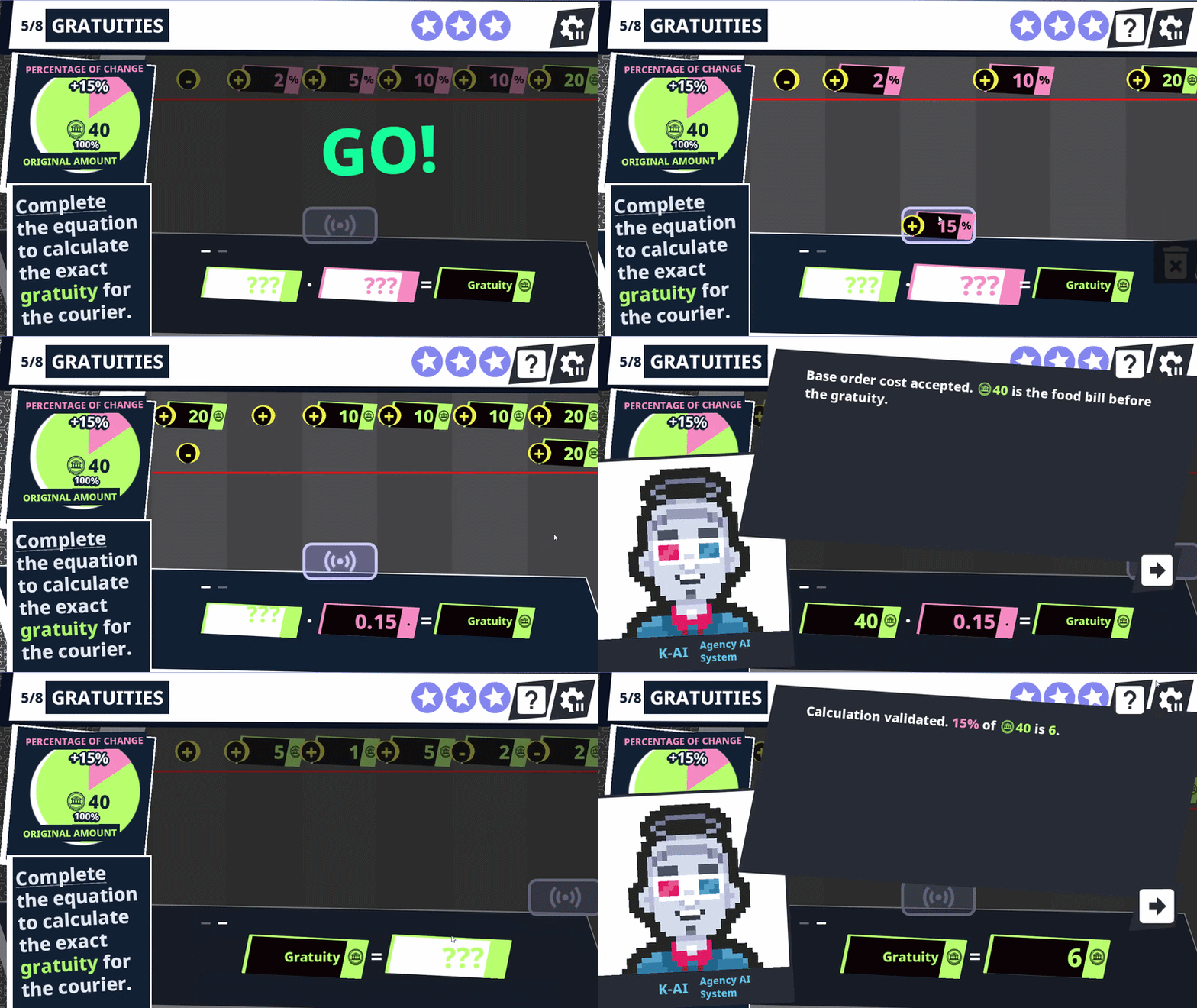
Welcome to the agency’s biggest live event: the Donothon. As Operator, students intercept descending data blocks — numbers, percentages, operations — and combine compatible blocks to fill missing slots in proportional equations.
Missions cover markdowns, simple interest, processing fees, tips, percent of change, and percent error. Speed matters, but precision matters more: wrong decimal conversion and the equation fails. It’s arcade pacing wrapped around the exact proportional reasoning middle school standards demand.
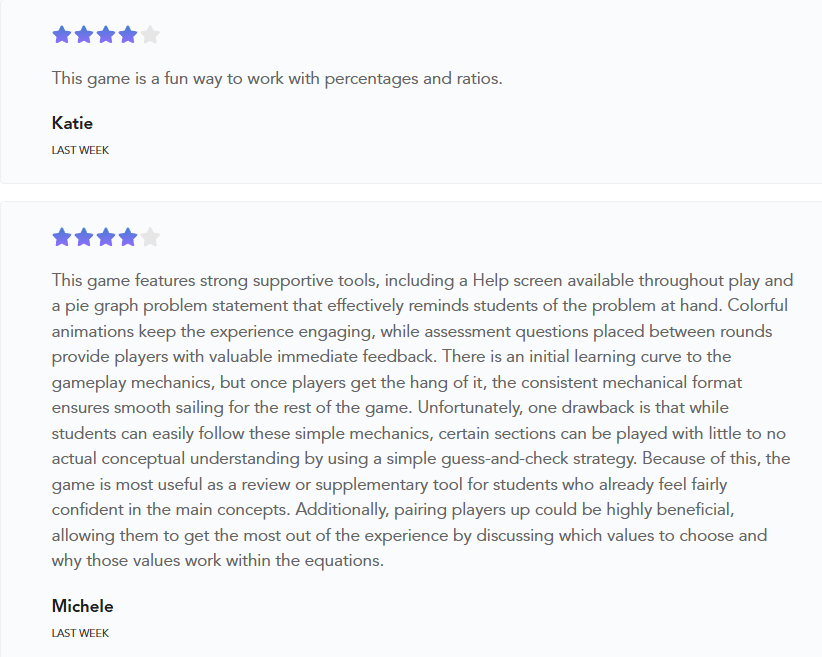
Grades 6–8 · Solve Problems With Proportion Including Percent
Classroom ideas: Introduce a percent unit by letting pairs complete one mission as a hook · Pause after a markdown mission and ask: “If you take 20% off, then 30% off, is that 50% off?” · Assign as small-group practice while you pull a targeted intervention group.
How Teachers Can Use These Math Games This Month
October is peak skill-building season. These K-8 math games fit cleanly into:
- Math workshop centers (10–20 minutes per station)
- Intervention / RTI blocks for rounding, factors, or percent recovery
- Early finisher rotations that still map to your standards
- Homework or at-home practice — browser-based, no setup beyond a student login
- Formative checks before a quiz on place value, factors, or proportions
For more options, revisit July’s elementary math releases or browse the full K-8 math game library.
Frequently Asked Questions
What grades are these new math games for?
Round and Deliver and Robot Maths: The Factor Factory target grades 3–5. The K Factor is built for grades 6–8. All live in our K–8 Learning Universe.
Are these math classroom games aligned to standards?
Yes. They support CCSS-aligned learning objectives for rounding whole numbers, prime/composite numbers and factor pairs (including 4.OA.B.4), and solving problems with proportions including percent.
Do students need prior Legends of Learning experience?
No. Each game includes in-game instructions and can be assigned directly from your teacher dashboard.
Can I track student progress?
Yes. When you assign games through Legends of Learning, you can monitor completion and performance from your account.
How long does a typical session take?
Most teachers use these as 10–20 minute blocks — long enough for meaningful practice, short enough for a center rotation.
🎮 Explore Learning Universe Games
Three games. Three high-demand skills. Assign-ready K-8 math games for your next math block.
New to Legends of Learning? Sign up today and assign your first game in minutes.
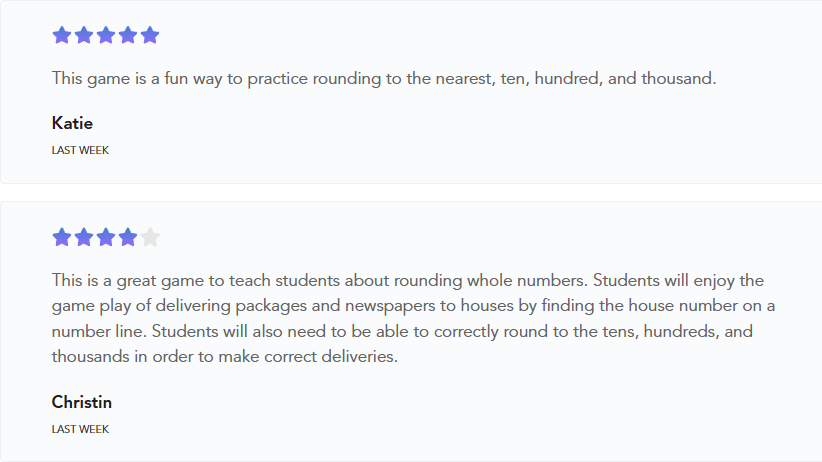
💬 Earn Reward Points — Don’t forget, you can earn Reward Points by leaving reviews on the games you play. Your feedback helps other educators discover the best learning experiences while helping us build even better games.
📩 Questions? Reach out anytime at support@legendsoflearning.com