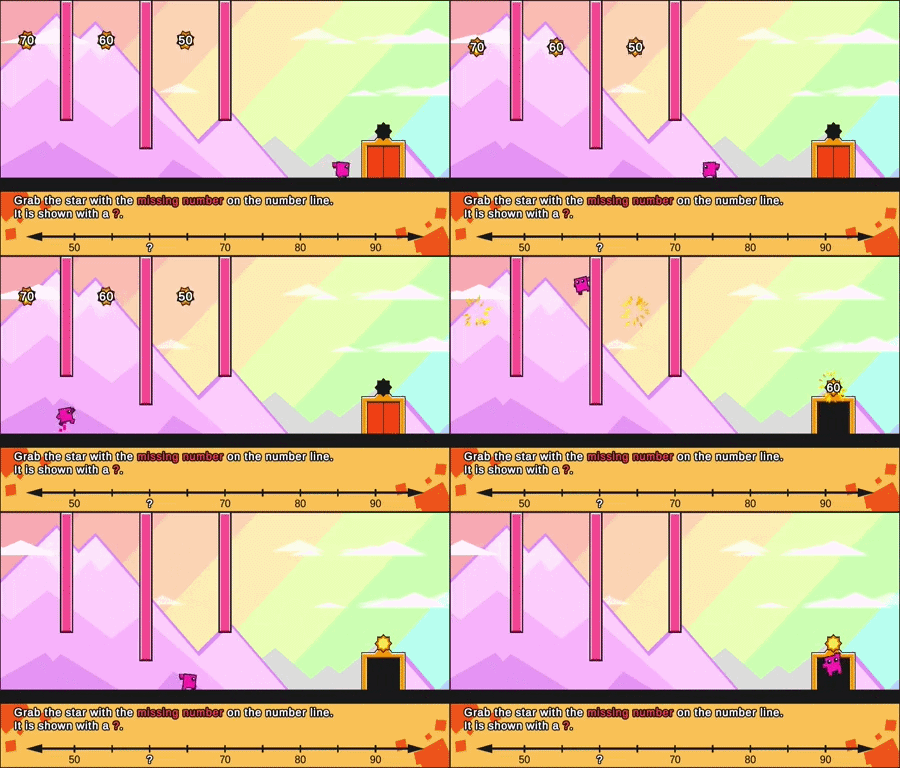
What are the best new math games for grades 3–5 this September?

Looking for new math games for grades 3–5 this September? Legends of Learning just added four classroom-ready titles: The Multiplication Express (multi-digit multiplication, CCSS 5.NBT.B.5), Mathbots (multiplication & division equations, CCSS 3.OA.A.4), Divide & Deliver (division with base-10 numbers, CCSS 5.NBT.B.6), and Last Line (coordinate plane, CCSS 5.G.A.1). All are free for teachers to assign.

What’s new in math for September 2026?

GameGradesPlaytimeStandardFocus
The Multiplication Express3–5~20 minCCSS 5.NBT.B.5Multi-digit multiplication
Mathbots3–5~25 minCCSS 3.OA.A.4Multiplication & division equations
Divide & Deliver3–5~18 minCCSS 5.NBT.B.6Division with base-10 numbers
Last Line3–5~15 minCCSS 5.G.A.1Coordinate plane & ordered pairs

The Multiplication Express — multi-digit multiplication
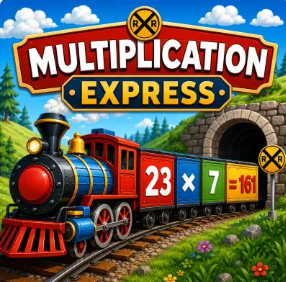
The Multiplication Express is a railroad puzzle where students become junior train conductors and work through the standard algorithm one digit at a time (problems like 35 × 28), using place value and regrouping along the way.

What teachers are saying

Mike: Focuses on two- and three-digit multiplication with a railroad theme. Incorporates place value relationships and regrouping, scaffolds each problem, and is great for practice or early finishers.

Michele: Bright and charming — a low-risk way to practice the standard algorithm step-by-step. Helpful feedback, unlimited attempts, real-world word problems, and a “spot the mistake” mode. Supports differentiation as players choose harder problems when ready.

Play / assign: teachers.legendsoflearning.com/games/4795

Mathbots — multiplication and division equations
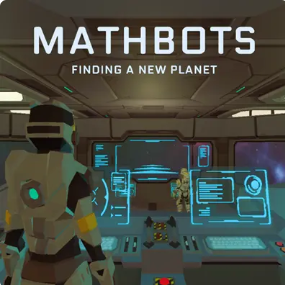
Mathbots sends students on a cosmic quest with inventive robots. Players use multiplication and division strategies, place value (ones and tens), and word problems to operate chain-reaction machines and advance the story.

What teachers are saying

Mike: Engaging space-themed story with a robot in a spaceship. Students practice multiplication and division strategies with explanations and illustrations before each concept. Perfect for extra practice.

Michele: Eye-appealing animation and a real-world context that’s easy to navigate. Students solve word problems with tens and ones across nine levels, with satisfying feedback for correct answers and retries for mistakes. An engaging and effective classroom tool.

Play / assign: teachers.legendsoflearning.com/games/4816

Divide & Deliver — division with base-10 numbers
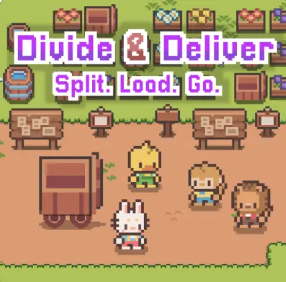
Divide & Deliver helps Mo the Monkey run a fruit stand. Students drag-and-drop fruit bundles to solve division problems by loading carts with the exact amounts — connecting multiplication and division through place value (ones, tens, hundreds).

What teachers are saying

Mike: Gives students opportunities to practice division using various strategies through problems that increase in difficulty. Great for extra practice.

Michele: A solid choice for students exploring the relationship between multiplication and division. Intentionally paced with a step-by-step visual approach; difficulty grows by introducing tens and hundreds. Three-star rewards and unlimited attempts keep learners motivated.

Play / assign: teachers.legendsoflearning.com/games/4564

Last Line — coordinate plane practice
Last Line puts students on defense in Alpha Quadrant. Build defensive units by entering coordinates on the X and Y axes and protect the base — practicing ordered pairs, origin, and the coordinate plane.

What teachers are saying

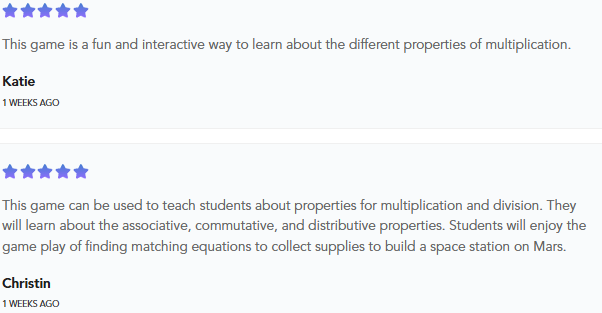
Katie: Students battle space enemies while practicing and interacting with coordinate pairs.

Christin: Teaches the coordinate plane and how to locate points. Students find given coordinates and enter their own to position defensive bots. Plan a little extra time — it’s a longer game if you want students to complete all levels.

Play / assign: teachers.legendsoflearning.com/games/4783

How to assign (free for teachers)

  1. Create a free teacher account at legendsoflearning.com.
  2. Search the game title (or browse Math by grade / Common Core).
  3. Add to a playlist and assign to your class.

FAQ

What new math games came out in September 2026?
Four grades 3–5 titles on Legends of Learning: The Multiplication Express, Mathbots, Divide & Deliver, and Last Line.

Are they free for teachers?
Yes — create a free account and assign games to your class.

What Common Core standards do they cover?
Multi-digit multiplication (5.NBT.B.5), multiplication/division equations (3.OA.A.4), division with base-10 (5.NBT.B.6), and the coordinate plane (5.G.A.1).

Can students play on Chromebooks?
Yes — games run in the browser and can be assigned for class or homework.
Is there a way to teach the Civil War through a game online?

Yes. You can teach the Civil War through an online game — for free. On Legends of Learning, The Civil War (~40 min, 4.9 ⭐ from 9 teacher reviews, grades 5–8) is the strongest classroom pick — aligned to NCSSS USH.22 with strategy, storytelling, and Union vs Confederacy gameplay. For a shorter option, use Civil War Stories (~25 min). Teachers assign in a few clicks; students play in the browser.

Best online games to teach the Civil War (grades 5–8)

When to useGamePlaytimeTeacher ratingStandardWhat students practice
Core Civil War unitThe Civil War40 min4.9 ⭐ (9)NCSSS USH.22Union vs Confederacy, battles, soldiers & civilians
Shorter block / stationsCivil War Stories25 min4.0 ⭐ (2)NCSSS USH.22Museum minigames; compare North & South
Before the war (causes)The Union Ledger20 min4.5 ⭐ (2)NCSSS USH.21Missouri Compromise, tensions, nation divided
Context / mid-1800sAfrican Americans in the Mid 1800s15 min4.7 ⭐ (3)NCSSS USH.20Slavery, freedom, Underground Railroad, daily life

Best pick for the main lesson: The Civil War — highest teacher rating (4.9), deepest gameplay, clearly mapped to USH.22.
Best pick if you only have 25 minutes: Civil War Stories.
Best pick for “causes of the Civil War” day: The Union Ledger (USH.21) before the war games.

How to use these games in a Civil War lesson plan

  1. Day 1 — causes: assign The Union Ledger or African Americans in the Mid 1800s.
  2. Day 2 — the war: assign The Civil War (plan a full period).
  3. Stations / review: Civil War Stories.
  4. Exit ticket: one cause of the war + one difference between Union and Confederacy from the game.

How to assign the game (free for teachers)

  1. Create a free teacher account at legendsoflearning.com.
  2. Open The Civil War or search “Civil War.”
  3. Add the game to a playlist and assign it to your class.

FAQ

Is there really a free online game for teaching the Civil War?
Yes — The Civil War and Civil War Stories on Legends of Learning are free for teachers (grades 5–8).

What standard does The Civil War cover?
NCSSS USH.22 — The Civil War.

What if I’m teaching causes, not battles yet?
Use The Union Ledger (USH.21 — A Nation Divided) first.

Can students play on Chromebooks?
Yes — games run in the browser and can be assigned for class or homework.
What’s a good Bill of Rights game for middle school?

Looking for a Bill of Rights game for middle school? On Legends of Learning, Law & Disorder (~30 min, 5.0 ⭐, NCSSS USH.10) and You Got A Case (~24 min, 5.0 ⭐, USH.10) are the strongest classroom picks — students step into legal roles and apply amendments to real scenarios. For a shorter option, use You’ve Got Rights! (~17 min). All are free for teachers to assign online (grades 5–8).

Best Bill of Rights & Constitution games (grades 5–8)

TopicGamePlaytimeTeacher ratingStandardWhat students do
The Bill of RightsLaw & Disorder30 min5.0 ⭐ (3)NCSSS USH.10Run a law office; apply Bill of Rights in courtroom scenarios
The Bill of RightsYou Got A Case24 min5.0 ⭐ (2)NCSSS USH.10Legal intern cases tied to amendments; critical thinking
Bill of Rights / civil rightsYou’ve Got Rights!17 min5.0 ⭐ (2)Bill of Rights / civicsDecide if constitutional rights were violated
The ConstitutionConstitution Architect13 min5.0 ⭐ (2)NCSSS USH.9Card-driven civics — branches, clauses, founding scenarios
Early republic / foundingFounding Choices30 min4.3 ⭐ (3)NCSSS USH.11Make founding-era decisions on federal power & liberty
Supreme Court / amendmentsThe Liberty Docket25 min5.0 ⭐ (2)Civics / amendmentsDebate landmark cases using constitutional amendments

Top pick for Bill of Rights unit: Law & Disorder or You Got A Case — both explicitly aligned to USH.10 with 5.0 teacher ratings.
Top pick for a short class period: You’ve Got Rights! (~17 min).
Teaching the Constitution first: pair Constitution Architect (USH.9) before Bill of Rights games.

Is there a way to teach the Bill of Rights through a game online?

Yes. Start with Constitution Architect if students need the framing document (USH.9), then assign You Got A Case or Law & Disorder for amendment application (USH.10). Teachers assign free from Legends of Learning; students play in the browser.

How to use this in a middle school civics lesson plan

  1. Day 1 — Constitution basics: Constitution Architect (~13 min) + discuss the three branches.
  2. Day 2 — Bill of Rights: You’ve Got Rights! warm-up, then You Got A Case.
  3. Extension: The Liberty Docket for Supreme Court / amendment debates.
  4. Exit ticket: name one amendment + one example of a protected right from the game.

How to assign (free for teachers)

  1. Create a free teacher account at legendsoflearning.com.
  2. Open Law & Disorder or search “Bill of Rights.”
  3. Add to a playlist and assign to your class.

FAQ

What’s the best free Bill of Rights game for 6th–8th grade?
Law & Disorder or You Got A Case on Legends of Learning — grades 5–8, NCSSS USH.10, 5.0 teacher ratings.

Do you have a Constitution game for middle school?
Yes — Constitution Architect (NCSSS USH.9, ~13 min).

Are these free for teachers?
Yes — free teacher accounts can assign games online.

What vocabulary do students see?
Bill of Rights, amendment, freedom of speech, search and seizure, Miranda rights, trial, jury, constitutional rights (varies by game).

What are the best educational game platforms for K-8 science and math?

The best educational game platforms for K–8 science and math are the ones that combine three things: standards alignment (games mapped to NGSS/Common Core), a large, curated game library, and free access for teachers with progress tracking. On those criteria, Legends of Learning is a top choice for standards-aligned science and math — with hundreds of games teachers can assign by standard, free.

What to look for in a K–8 game platform

  • Standards alignment (NGSS / Common Core / state). Can you find a game by your exact standard? This is what makes a game lesson-ready instead of just fun.
  • Library depth and quality. Enough games per topic, with teacher ratings so you can pick proven ones.
  • Free for teachers. No paywall to assign to your class.
  • Progress tracking. See how students did, per standard.
  • Device support. Works on Chromebook and iPad; ideally text-to-speech and multi-language.

Why Legends of Learning stands out for science and math

  • Built around standards. Every game is mapped to specific NGSS or Common Core learning objectives, so you search by standard and get lesson-ready games.
  • Deep, rated library. Hundreds of curriculum-aligned games with teacher ratings — e.g. Fraction Dungeon Escape (4.9 ⭐) for math, Elico: Food Webs (4.7 ⭐) and Happy Sun Farm for science.
  • Free for teachers. Create an account, assign games, and track progress at no cost.
  • Classroom-ready. Games run in the browser, fit a single class period, and many support iPad, text-to-speech, and multiple languages.

Example games by subject

SubjectGameGradesRating
Math — fractionsFraction Dungeon Escape3–54.9 ⭐
Math — fractionsThe Fractions Space Tournament3–54.6 ⭐ (116)
Science — ecosystemsElico: Food Webs3–54.7 ⭐
Science — photosynthesisHappy Sun Farm3–54.4 ⭐
Science — Earth’s waterDive into Earth’s Water3–54.5 ⭐ (66)

FAQ

What’s the best free educational game platform for K–8 science and math?

Legends of Learning is a top pick for standards-aligned science and math games, free for teachers, with a large rated library.

Are the games aligned to standards?

Yes — games are mapped to NGSS and Common Core learning objectives, so you can search by your standard.

Is it really free for teachers?

Yes — teachers create a free account and assign games to their class.

What grades and subjects are covered?

K–8, with deep coverage of science and math.

2 New Elementary Math Games for July: Counting & Conversions

Hi Legends! 👋 Welcome back to another update from our Learning Universe. This July we’re adding two new elementary math games for grades K–5 — one for counting foundations, one for measurement conversions — and both turn practice into progress you can see.

Counting and measurement are the math skills students use every day — but on a worksheet, they rarely feel that way.

📚 If you missed last month’s releases, revisit June’s math update to explore recent games.

📐 New Elementary Math Games for July

Get ready to bring fresh energy into your classroom with these new interactive math classroom games!

Grades K–2

  • Earthbound Expedition – Counting Cinder: Join a magical mining adventure where every gem counts! Students practice Counting Objects by collecting, tracking, and counting stones arranged in lines, arrays, and scattered groups.

Grades 3–5

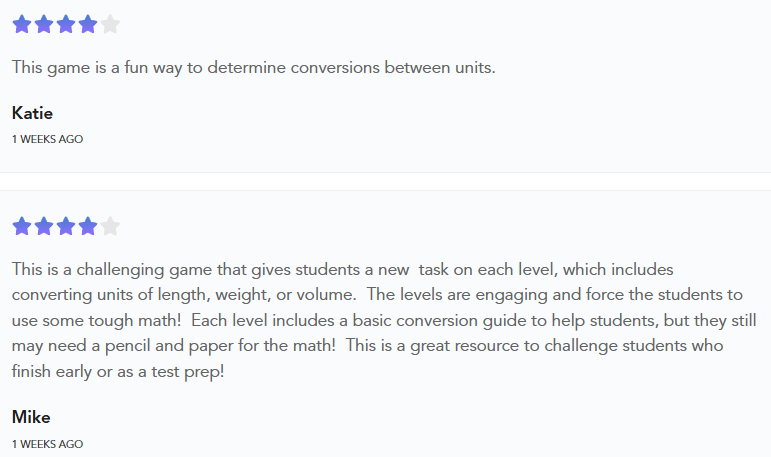
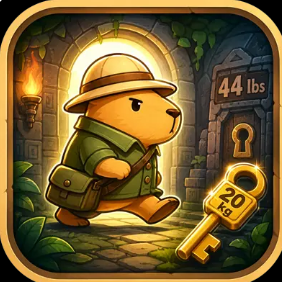
  • Capy’s Conversion Quest: Embark on a dungeon adventure where every puzzle depends on accurate measurements! Students practice Converting Between Standard Measurement Units to build bridges, balance scales, fill containers, and overcome obstacles.

Play games


🍎 Teacher Tip: Use these games during summer learning, centers, early finisher rotations, or back-to-school review. After gameplay, ask students to explain one strategy they used — a simple way to reinforce math vocabulary, check understanding, and help prevent the summer slump!

The Problem These Games Solve

For K–2: Counting isn’t just saying numbers in order. Students need to count accurately when objects are arranged differently — in a line, a rectangle, a circle, or scattered across a scene. That’s a different cognitive task than reciting “1, 2, 3,” and it shows up constantly in early math standards.

For 3–5: Unit conversion is where math starts feeling abstract. Kilograms vs. tonnes, centimeters vs. meters — students memorize formulas but struggle to know when to convert and why it matters. Capy’s Conversion Quest puts conversions inside puzzles where getting the unit wrong has an immediate, visible consequence.

Both games address a gap that shows up every year: skills that look simple on paper but need repeated, contextual practice to stick — which is exactly what effective elementary math games should deliver.

😎 A Closer Look at Our Elementary Math Games

These new games transform skill practice into interactive adventures students actually look forward to playing.


⛏️ Earthbound Expedition: Counting Cinder — Grades K–2 Math

Earthbound Expedition — elementary math game for counting

Grades K–2 · Counting Objects

Victor works in a magical mine where cinders — glowing stones arranged in different formations — block the path to valuable gems. Students count each formation carefully, ignite the cinders in the right sequence, and clear the way forward.

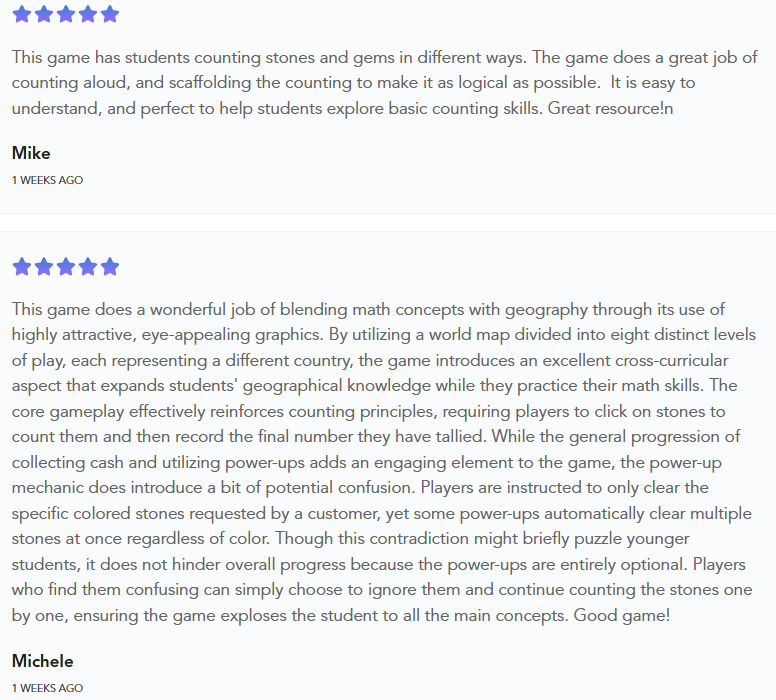
What starts as simple one-to-one counting evolves. Formations shift from neat rows to rectangles, circles, and scattered groups. Power-ups and visual feedback keep younger learners engaged without overwhelming them.

This is counting practice with structure: students aren’t just hitting a number — they’re deciding how to count based on how objects are organized, which mirrors what early number sense standards actually require.

Classroom ideas: Assign as a 10-minute center during math workshop · Use before a lesson on subitizing or counting collections · Pair with a quick oral check: “How did you know how many cinders were in that circle?”

Student reviews for Earthbound Expedition
 Earthbound Expedition gameplay showing counting objects

🗝️ Capy’s Conversion Quest — Grades 3–5 Math

Grades 3–5 · Converting Between Standard Measurement Units

The Adventurers’ Guild entrance exam drops students into an ancient ruin — monsters, mazes, locked doors, and measurement puzzles at every turn. To advance, players convert between standard units of weight, length, and volume to balance scales, build bridges, fill pits, and craft tools.

The conversion reference (like 1 t = 1000 kg) appears in context, not on a separate reference sheet. Students choose the right unit, apply it, and immediately see whether their solution works. Wrong conversion? The bridge doesn’t hold. Right one? They move deeper into the dungeon.

That’s the difference between memorizing conversion tables and understanding measurement as a tool for solving problems — which is exactly what grades 3–5 standards push toward.

Classroom ideas: Introduce a measurement unit with one dungeon level as a hook · Assign specific puzzle types (scale puzzles for weight, bridge puzzles for length) based on what you’re teaching that week · After gameplay, ask students to write their own conversion word problem inspired by a puzzle they solved.

 Capy's Conversion Quest — measurement unit conversions
Student reviews for Capy's Conversion Quest
Capy's Conversion Quest gameplay showing unit conversion puzzles

Using These Games Beyond Summer

Summer math programs are an obvious fit, but these games earn their place in a regular school year too:

  • Intervention blocks for students who need extra counting or conversion practice
  • Early finisher stations that reinforce skills without adding grading load
  • Family engagement — both games are accessible enough for at-home practice with minimal setup
  • Beginning-of-year refreshers when students return and need to rebuild fluency

For more options, check June’s math releases or browse the full K-8 math game library.

Frequently Asked Questions

What ages or grades are these games for?
Earthbound Expedition: Counting Cinder is designed for grades K–2. Capy’s Conversion Quest targets grades 3–5.

Do students need prior experience with Legends of Learning?
No. Both games include in-game instructions and can be assigned directly from your teacher dashboard.

Can I track student progress?
Yes. When you assign games through Legends of Learning, you can monitor completion and performance from your account.

Are these aligned to standards?
Both games support CCSS-aligned learning objectives for counting objects and converting between standard measurement units.

🎮 EXPLORE LEARNING UNIVERSE GAMES

Whether you’re running summer school or planning fall units, these elementary math games fit a 10-minute block as easily as a full period.

Two games. Two grade bands. Real math skills students will use again and again.

Start exploring math games

New to Legends of Learning? Sign up today and start exploring!

💬 Earn Reward Points
Don’t forget, you can earn Reward Points by leaving reviews on the games you play. Your feedback helps other educators discover the best learning experiences while helping us build even better games.

📩 Questions? Reach out  anytime at support@legendsoflearning.com

Middle School Science Games: 3 New Releases for July 2026

Hi Legends! 👋 Welcome back to another update. This July we’re adding three new middle school science games for grades 6–8 — and they put students inside the investigation, not just in front of a textbook.

Science in grades 6–8 hits a tricky stretch in July — labs wind down, attention drifts, and concepts like hypothesis testing or electromagnetism start to feel like vocabulary lists instead of ideas students can actually use.

This month our K-8 Learning Universe adds three new middle school science games for grades 6–8 that put students inside the investigation. Bowling lanes, asteroid fields, and dig sites included.

📚 If you missed last month’s releases, revisit June’s science update to explore recent games.

🧪 New Middle School Science Games for July

Get ready to bring fresh energy into your classroom, summer learning program, or review days with these engaging science classroom games!

Grades 6–8

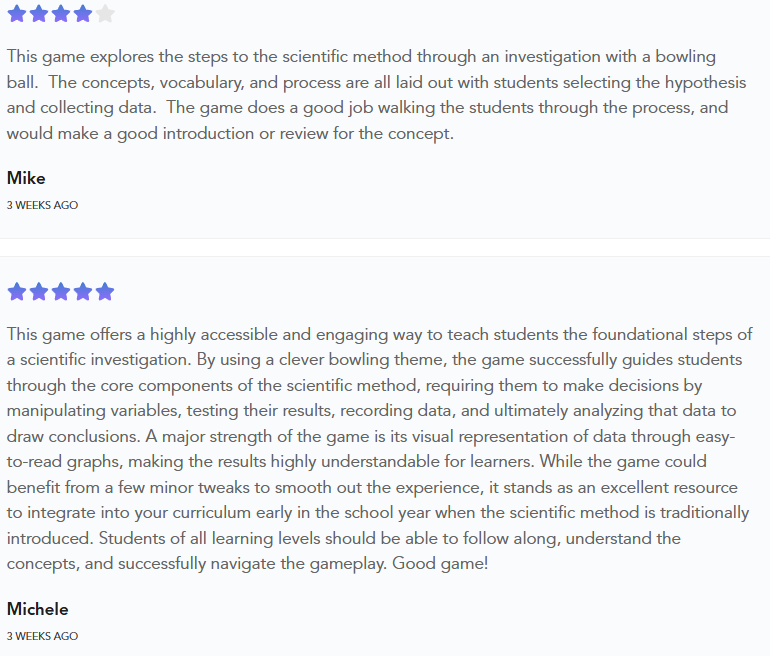
  • Bowling Method: Investigate a bowling challenge like a real scientist! Students explore the Scientific Method through observation, hypothesis, experiment, data analysis, and communication.

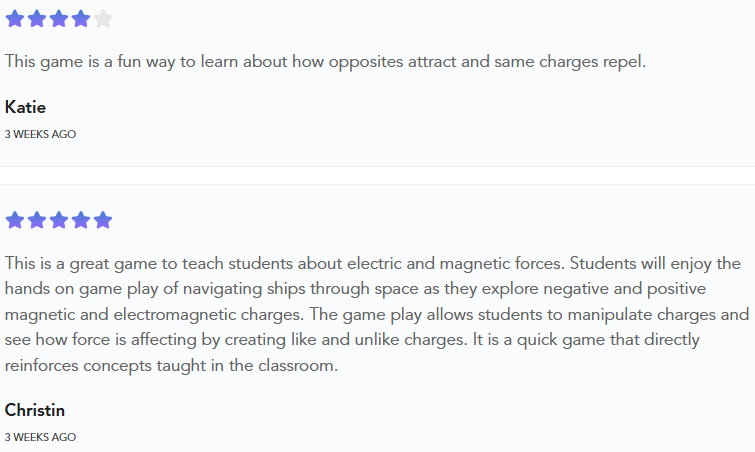
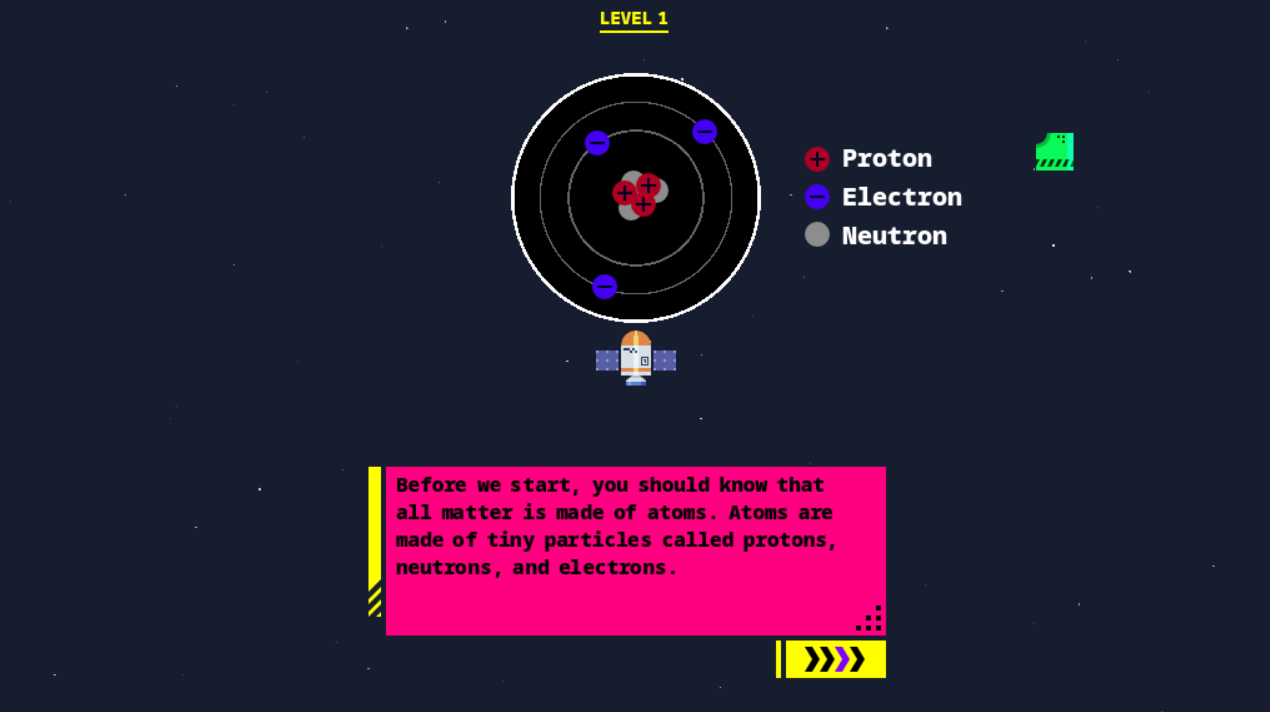
  • Space Junk Hunt: Pilot a spaceship through hazardous asteroid fields using electric charges and electromagnets! Students explore Electric and Magnetic Forces through attraction, repulsion, and electromagnetism.

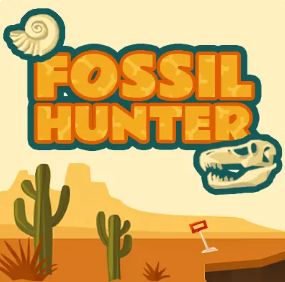
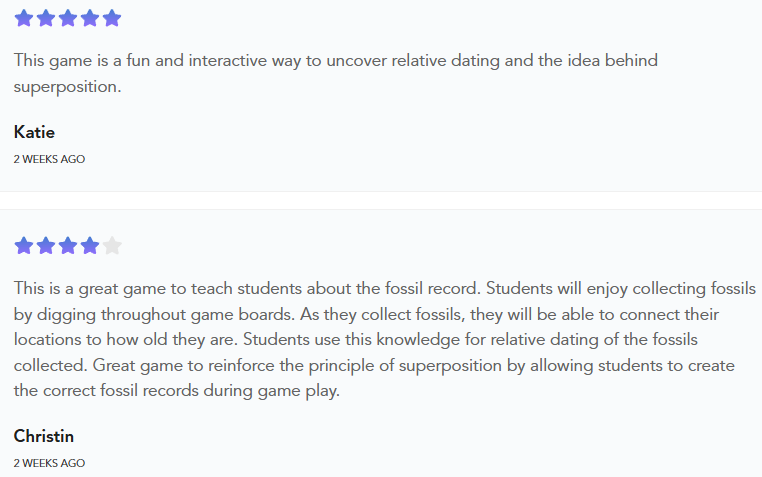
  • Fossil Hunter: Dig for fossils and uncover Earth’s history! Students explore the Fossil Record by excavating fossils and using rock layers to determine relative ages.

Play games

💡 Teacher Tip: Use these games during centers, early finisher rotations, summer learning activities, or back-to-school review days. After gameplay, ask students to explain one scientific concept they observed, a simple way to reinforce vocabulary and check understanding.

Why These Topics Work Better as Games

The scientific method is a process, not a paragraph. Students need repetition across different scenarios before “form a hypothesis” becomes something they do automatically. Bowling Method gives them that repetition inside a low-stakes environment they already understand.

Forces and electromagnetism are invisible until something moves. Space Junk Hunt makes charge and magnetism visible and consequential — miss the repulsion window and your ship doesn’t make it through the field.

The fossil record asks students to reason backward through time. Fossil Hunter turns stratigraphy into a puzzle: dig deeper, compare layers, figure out what came first.

These aren’t review drills dressed up with graphics. Each game is built around a specific NGSS-aligned concept and asks students to do the science, not just recall it.

😎 A Closer Look at Our Middle School Science Games

These new middle school science games turn learning into an interactive adventure! 🎉

🎳 Bowling Method — Grades 6–8 Science

Middle school science game Bowling Method — scientific method

That’s the heart of Bowling Method: inquiry disguised as a sport. Players observe, hypothesize, experiment, analyze, and communicate findings — the full scientific method loop — without it ever feeling like a worksheet labeled “Lab Report.”

Best for: Introducing or reinforcing the scientific method, discussing quantitative vs. qualitative data, or opening a unit on variables and fair testing.

Try this after gameplay: Ask pairs to defend one conclusion using only data from their last three throws. If two groups got different results, have them explain why — that’s where the real science conversation starts.

Student reviews for Bowling Method middle school science game
Bowling Method gameplay — middle school science games


🚀 Space Junk Hunt — Grades 6–8 Science

A spaceship, a debris field, and a mission that only works if you understand how electric and magnetic forces behave. Students use attraction and repulsion to navigate hazards, collect junk, and survive increasingly tight asteroid corridors.

What makes this one stick: force isn’t a definition on a slide. It’s the difference between clearing a gap and getting stuck. Students start predicting outcomes — “if I flip the charge here, the debris should push away” — which is exactly the kind of reasoning NGSS force standards are built around.

Best for: Units on electric and magnetic forces, energy transfer discussions, or any lesson where students struggle to connect invisible forces to real-world outcomes.

Try this after gameplay: Have students sketch the force diagram for one mission they completed. Label where attraction helped and where repulsion was necessary.

Middle school science game Space Junk Hunt — electric and magnetic forces
Student reviews for Space Junk Hunt middle school science game
Educational content in Space Junk Hunt science game

🦴 Fossil Hunter — Grades 6–8 Science

Middle school science game Fossil Hunter — fossil record

Students grab a shovel and go down — layer by layer, fossil by fossil. Each discovery sits in a specific stratum, and organizing the fossil record means understanding which specimens are older, which are younger, and what the rock layers reveal about Earth’s past.

Fossil Hunter rewards patience and pattern recognition. The deeper you dig, the more context you have — mirroring how paleontologists actually work. It’s a strong fit for students who learn best when they can see progress accumulate over time.
Best for: Earth history units, discussions of relative dating, or connecting fossil evidence to environmental change over geologic time.

Try this after gameplay: Ask students to write a three-sentence “field report” describing one fossil they found and how they determined its relative age.

Student reviews for Fossil Hunter middle school science game
Fossil Hunter gameplay — middle school science games

Where These Fit in Your Summer or Fall Plans

You don’t need a full lab block to use these. They work well as:

  • Warm-ups before a related lesson (10–15 minutes)
  • Station rotation activities during summer school or camp programs
  • Pre-assessment tools — watch how students approach problems before you teach the unit
  • Back-to-school review in August, when students need to reactivate science thinking without heavy reading load

Looking for more options? Browse June’s science releases or explore the full K-8 science game library.

Frequently Asked Questions

What grade levels are these games designed for?
All three are built for grades 6–8 within our K-8 Learning Universe and align with NGSS science standards.

Are these games free to try?
Yes. Create a free account on Legends of Learning to assign games to your class or explore them!

Can I use these outside of summer school?
Absolutely. While they’re great for summer programs, these games work year-round for unit introduction, review, centers, and test prep.

How do I know which game matches my lesson?
Search by standard in the Learning Universe, or filter by topic: scientific method, forces, or earth science.

🌎 Explore Learning Universe Games

These middle school science games are ready to assign today — no lab setup required.

Browse July science games

New to Legends of Learnings? Sign up today and start exploring!

💬 Don’t forget — you can earn Reward Points by leaving reviews on the games you play. Your feedback helps other educators discover the best learning experiences and guides us in building even better educational content.

📩 Questions? Contact us anytime at support@legendsoflearning.com

New Summer Science Games for the Classroom

Hi Legends! 👋 Welcome back to another exciting update from our Learning Universe! This June, we’re introducing brand-new summer science games designed to keep students engaged while reinforcing key science concepts through interactive, game-based learning.

From ecosystems and food webs to thermal energy and life cycles, these hands-on adventures help students stay curious, active, and learning all summer long.

📚 If you missed last month’s new games, you can revisit April’s update to explore recent releases.

🧪 New Summer Science Games

Get ready to bring fresh energy into your classroom, summer learning program, or review days with these engaging science adventures!

Grades 3–5

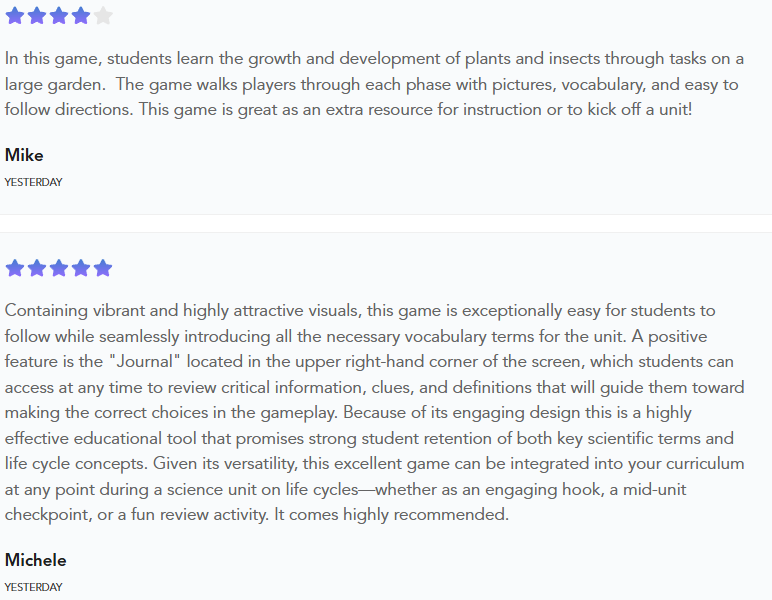
  • Garden Quest: Learn about the Growth and Development of Organisms by pollinating flowers, growing plants, and exploring life cycles through interactive gameplay.

Grades 6–8

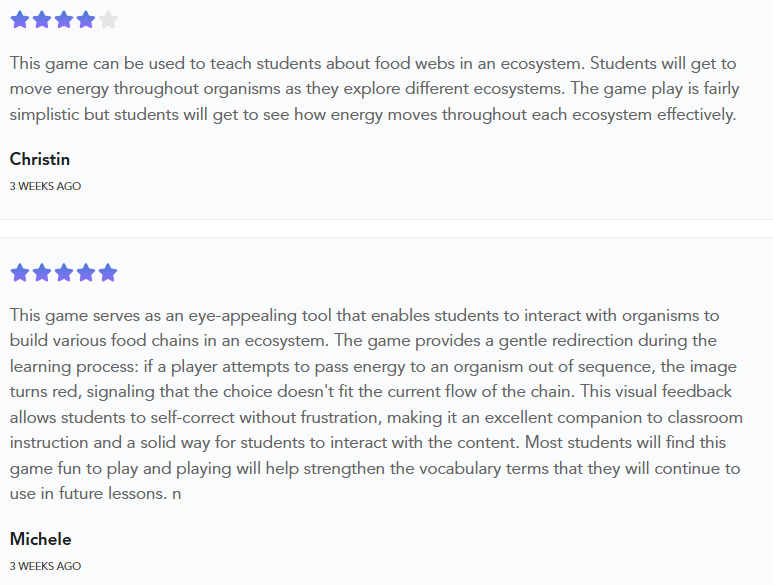
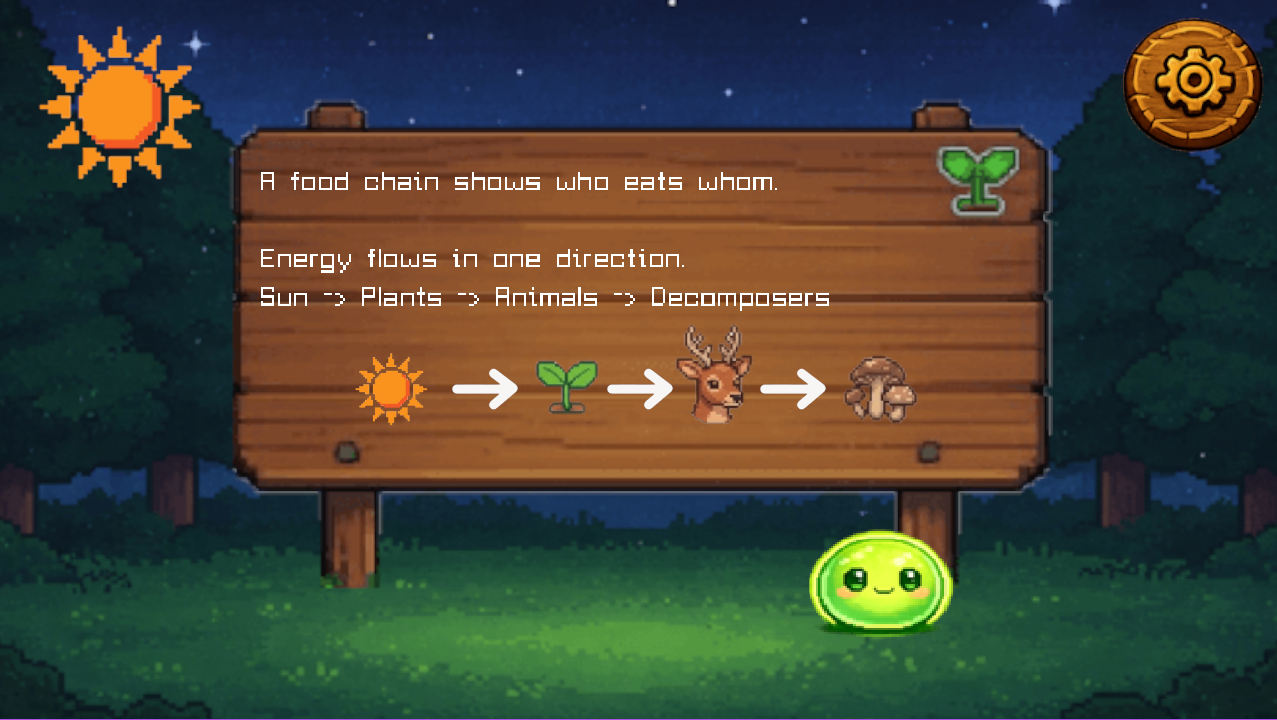
  •  Life Loops – The Food Web Game: Build and restore ecosystems by creating food webs, balancing energy flow, and helping plants, animals, and decomposers survive together.

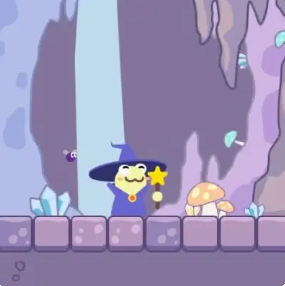
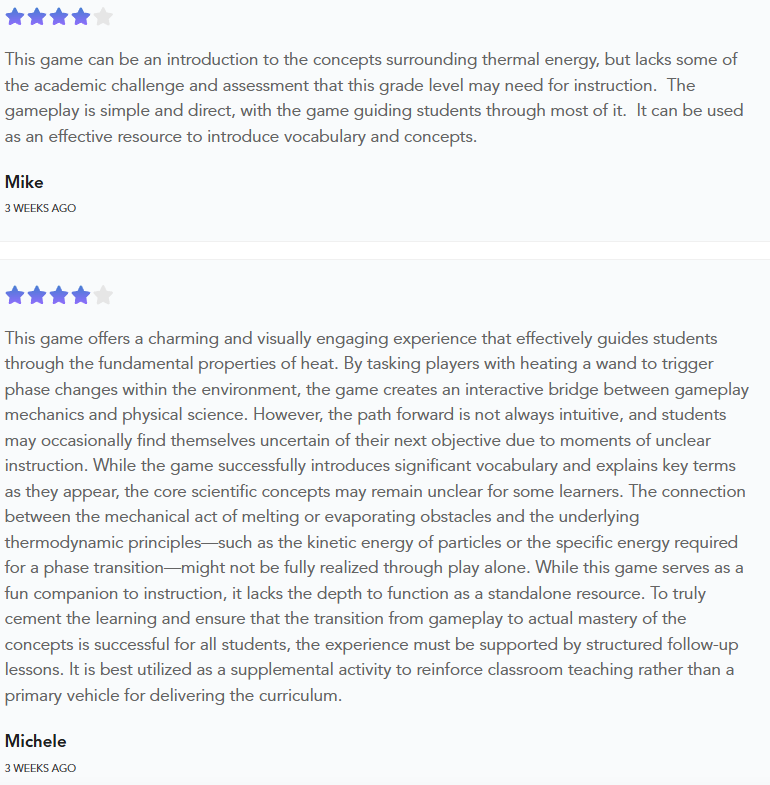
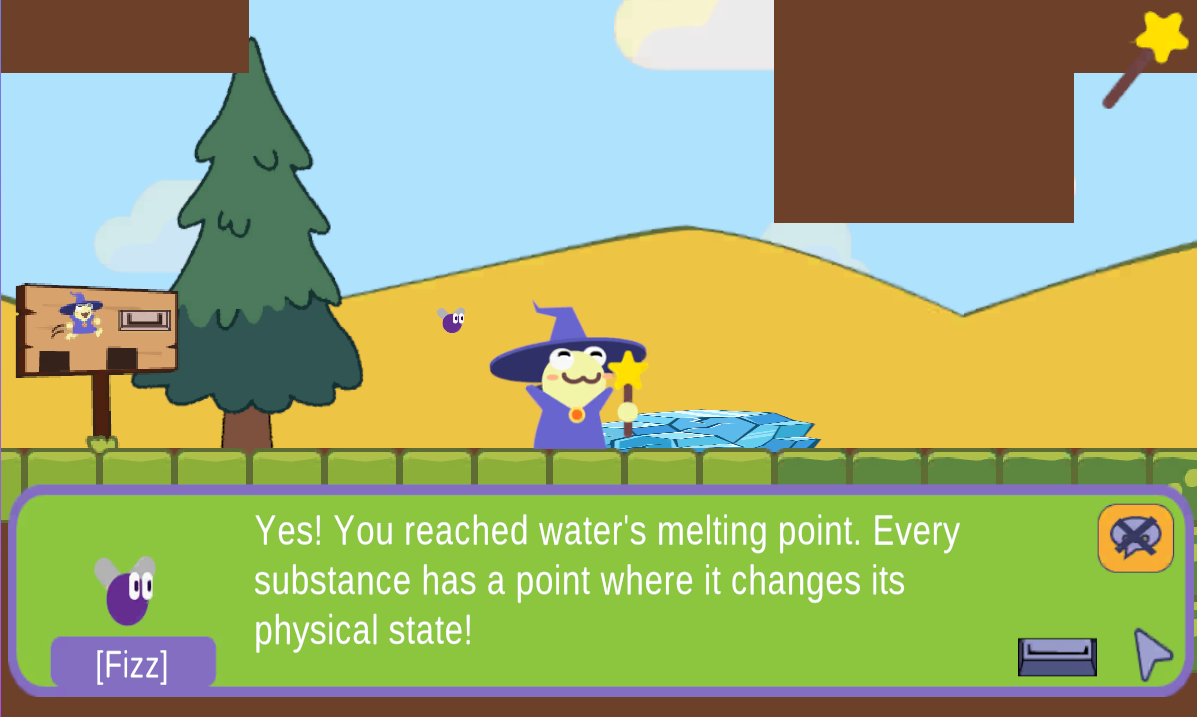
  • WaldThermoMage: Discover the Flow of Thermal Energy by melting ice, evaporating water, conducting heat, and solving magical science puzzles.

💡 Teacher Tip: Use these games during centers, early finisher rotations, summer learning activities, or back-to-school review days. After gameplay, ask students to explain one scientific concept they observed, a simple way to reinforce vocabulary and check understanding.

These new science games turn learning into an interactive adventure! 🎉 Students explore ecosystems, energy transfer, and life cycles through meaningful, hands-on gameplay experiences.

🌱 Garden Quest — Elementary Science

Garden Quest is a relaxing educational adventure where students explore a vibrant island garden and help living organisms grow, develop, and reproduce.

Players guide plants and insects through interactive tasks like pollination, seed growth, and observing complete and incomplete metamorphosis. Through hands-on gameplay, students discover how living things change over time and how ecosystems depend on these natural processes.

Designed to support science learning standards, Garden Quest transforms traditional review into meaningful exploration and discovery.


Life Loops – The Food Web Game — Middle Science

Step into a living ecosystem where every organism plays an important role. In Life Loops, students become glowing energy orbs with the power to restore balance to the natural world.

Players wake up animals, trigger food chains, and repair damaged ecosystems while exploring how energy flows through plants, animals, and decomposers. As ecosystems grow and evolve, students build a deeper understanding of food webs and environmental balance.

This interactive adventure encourages systems thinking while making science concepts approachable and fun.


🔥 WaldThermoMage — Middle Science

Join Waldo, a young thermal mage, on a magical journey through an enchanted forest where temperature itself has fallen out of balance.

Using a wand that absorbs and releases thermal energy, students solve puzzles by melting ice, evaporating lakes, conducting heat through metals, and harnessing radiation. Along the way, players explore how thermal energy moves and transforms in the world around them.

By blending fantasy storytelling with science-based problem-solving, WaldThermoMage helps students better understand complex energy concepts through experimentation and play.


🌎 Explore Learning Universe Games

More exciting science updates are coming soon — stay tuned!

New to Legends of Learnings? Sign up today and start exploring!

💬 Don’t forget — you can earn Reward Points by leaving reviews on the games you play. Your feedback helps other educators discover the best learning experiences and guides us in building even better educational content.

📩 Questions? Contact us anytime at support@legendsoflearning.com

New Summer Math Games!

Summer math games are a great way to keep students engaged while reinforcing essential skills through interactive, game-based learning. This June, we’re introducing brand-new adventures from our Learning Universe designed to make math practice fun and effective.

From coordinate planes and fractions to multiplication properties and integers, these new summer math games help students build confidence while having fun.

📚 If you missed last month’s new games, you can revisit May’s update to explore recent releases.

📐 New Summer Math Games for the Classroom

Get ready to bring fresh energy into your classroom with these new interactive math games!

Grades 3–5

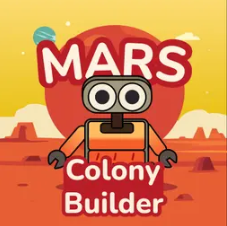
  • Mars Colony Builder: Help a Mars robot organize space crates using the Properties of Multiplication and Division to save the colony and power up life on Mars.
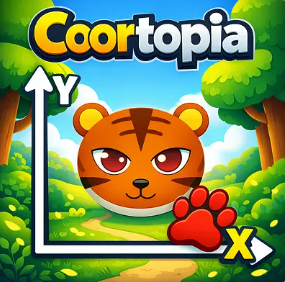
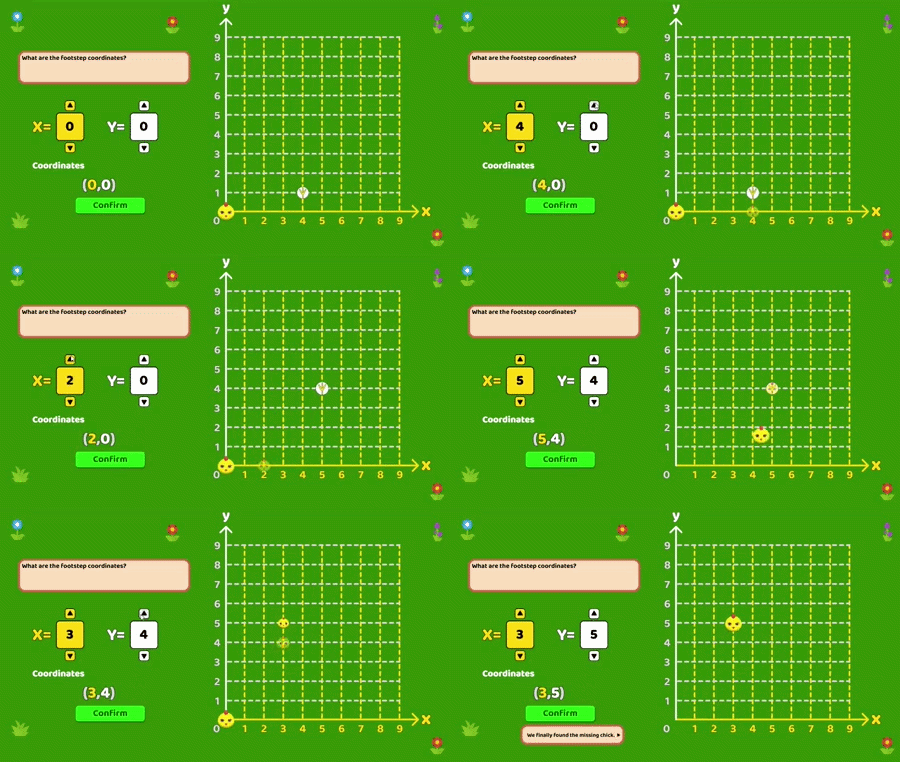
  • Coortopia The Rescue: Track down lost animals while learning how to define and navigate the coordinate plane using ordered pairs and map-based puzzles.
  • Donut Division: Serve coffee and donuts while mastering fractions with unlike denominators in this deliciously fun math adventure.

Grades 6–8

  • TWV: Number Line: Catch fish and explore opposite integers by matching positive and negative numbers along a lively seaside number line.
  • Eco Dispatcher: Compare truck speeds, energy output, and pricing while solving real-world unit rate problems to help eco-farms thrive.

These new summer math games transform skill practice into interactive adventures students actually look forward to playing.

🍎 Teacher Tip: Use these games during summer learning, centers, early finisher rotations, or back-to-school review. After gameplay, ask students to explain one strategy they used, a simple way to reinforce math vocabulary, check understanding, and help prevent the summer slump! Explore more summer math games inside the Learning Universe.


Mars Colony Builder — Elementary Math

In Mars Colony Builder,  students become friendly helper robots tasked with building the first human colony on Mars.

Through engaging multiplication and division challenges, learners apply the commutative, associative, and distributive properties to organize supplies, power machines, and unlock new habitats.

With colorful visuals, interactive gameplay, and space-themed storytelling, this game makes abstract math concepts feel meaningful and exciting.

plus-knight-3

Coortopia: The Rescue — Elementary Math

The shelter camp animals have escaped, and students are the only ones who can rescue them!

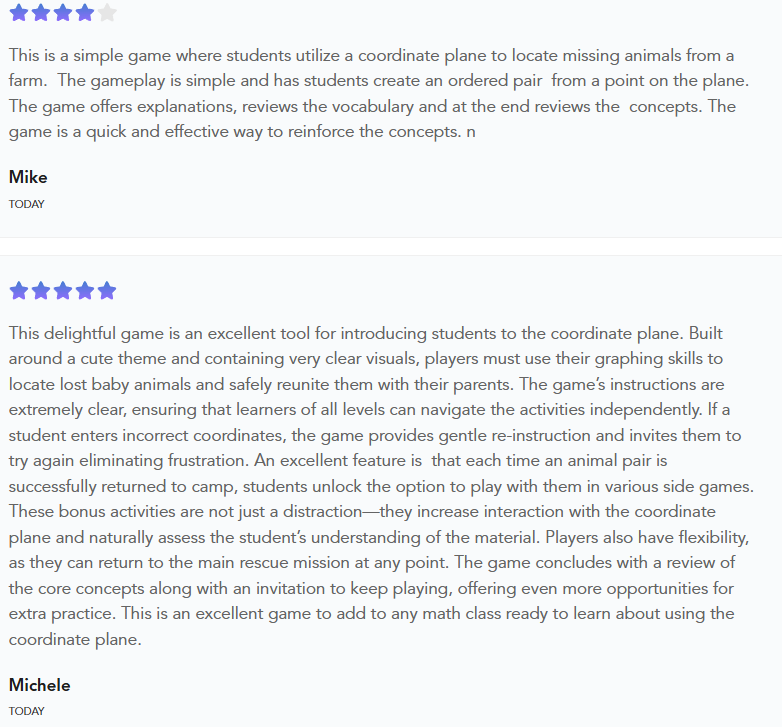
In Coortopia: The Rescue, players use coordinates and ordered pairs to locate missing animals across interactive maps and safely guide them back home.

This game combines problem-solving, exploration, and adorable animal interactions to help students build confidence with coordinate planes in a highly engaging way.


TWV: Number Line — Middle Math

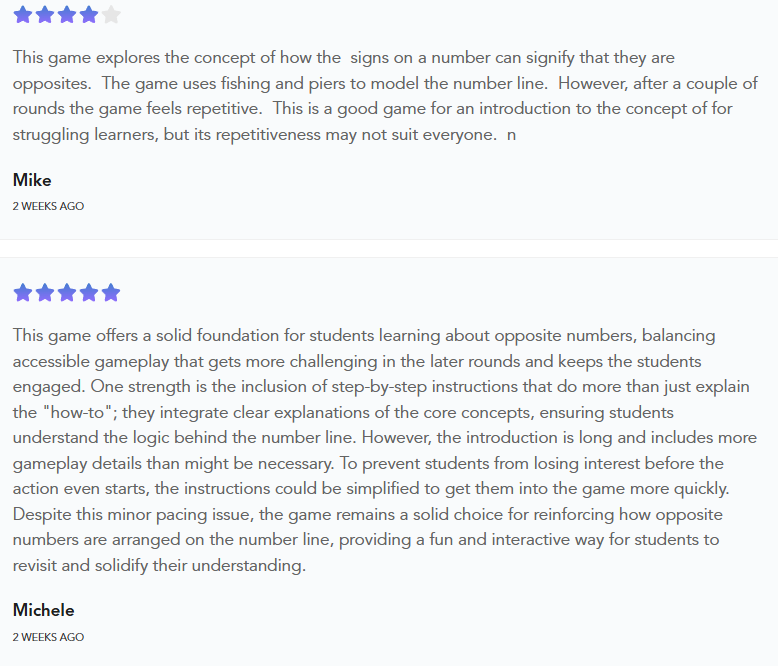
In this game students students join Zero, a quirky fishing robot, as they catch fish and deliver them to matching opposite-number stalls. Along the way, learners strengthen their understanding of positive and negative integers while expanding the town and upgrading their robot companion.

This playful adventure makes integer concepts visual, intuitive, and memorable!


🎮 EXPLORE LEARNING UNIVERSE GAMES

More exciting math game updates are coming soon, stay tuned!

New to Legends of Learning? Sign up today and start exploring!

💬 Earn Reward Points
Don’t forget, you can earn Reward Points by leaving reviews on the games you play. Your feedback helps other educators discover the best learning experiences while helping us build even better games.

📩 Questions? Reach out  anytime at support@legendsoflearning.com

Explore Motion, Energy & Weather With New Science Games This May

Hi Legends! Welcome back to another exciting update from our Learning Universe! This May, we’re introducing new science classroom games designed to spark curiosity, build critical thinking, and help students master key concepts through interactive, hands-on learning.

From motion and energy to weather systems, these games make science concepts easier to understand and more fun to explore.

📚 If you missed last month’s new games, you can revisit April’s update to explore recent releases.

🧪 New Science May Games.

Bring science to life with engaging adventures that help students explore motion, energy, and weather through real-world applications.

Grades 3–5
  • 🚀 SPACE RESCUE: The Motion Mission. Take on a space rescue mission where every move matters. Students solve physics-based puzzles while mastering patterns of motion and predicting how objects move.

  • ⚡ Space Volt Energy Online: Fix circuits, spin turbines, and power up systems while learning how electrical energy is generated, transferred, and transformed.
Grades 6–8
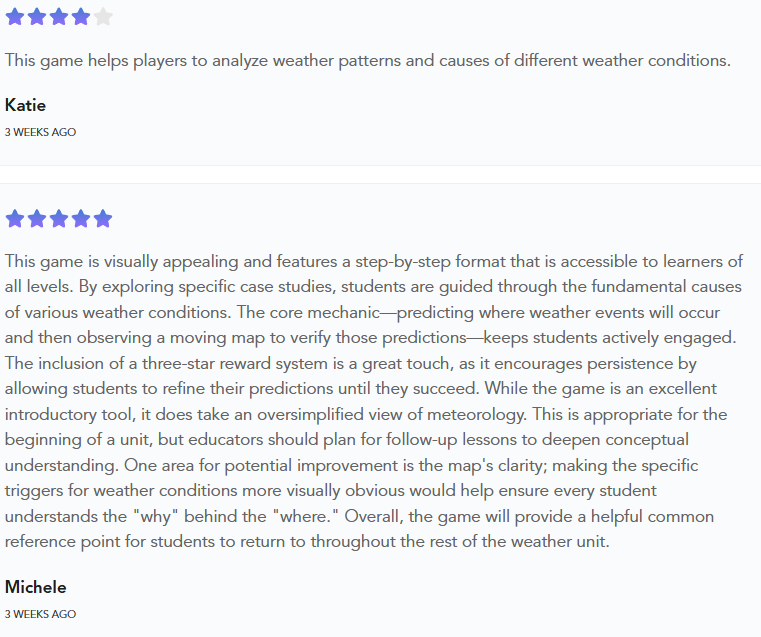
  • 🌦️ What’s The Weather? Become a weather detective! Students analyze maps, track air masses, and predict weather patterns while learning about the water cycle and atmospheric systems.

🍎 Teacher Tip: Before or after gameplay, ask students to predict what will happen next, whether it’s how an object will move or how weather conditions will change. This strengthens scientific reasoning and reinforces key concepts.

These science games turn learning into an interactive adventure! 🎉 Students explore motion, energy, and weather through hands-on challenges that make complex concepts easier to understand and apply.

🚀 SPACE RESCUE: The Motion Mission — Elementary Science

space-rescue-1

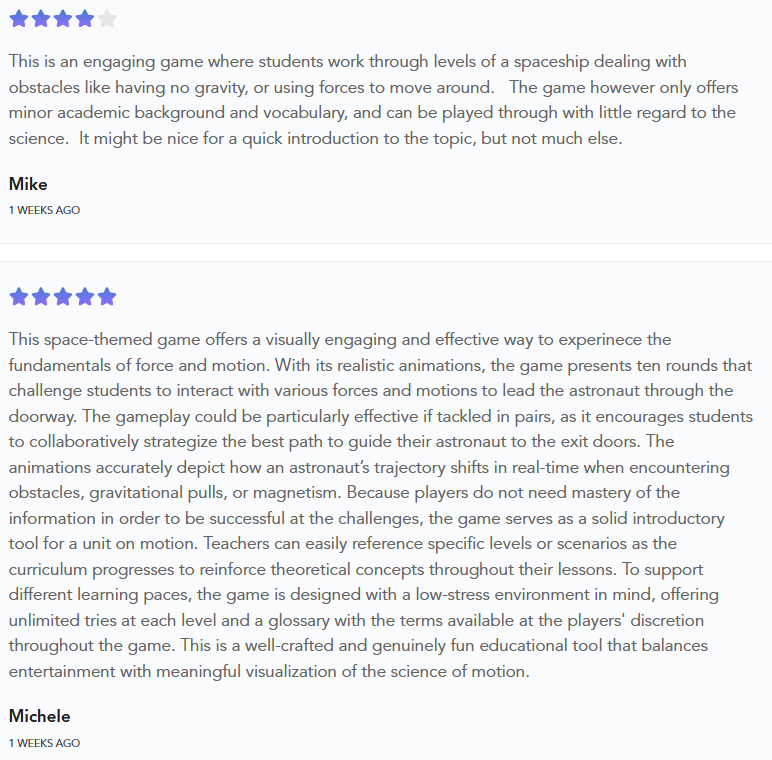
In SPACE RESCUE, students step into the role of an astronaut tasked with repairing a damaged spaceship. To reach the control cabin, players must navigate obstacles and solve physics-based puzzles using their understanding of motion and force.

Each level challenges students to predict movement, remove obstacles, and activate systems—reinforcing key concepts in motion through problem-solving and exploration.

space-rescue-2
space-rescue-3


Space Volt Energy Online — Elementary Science

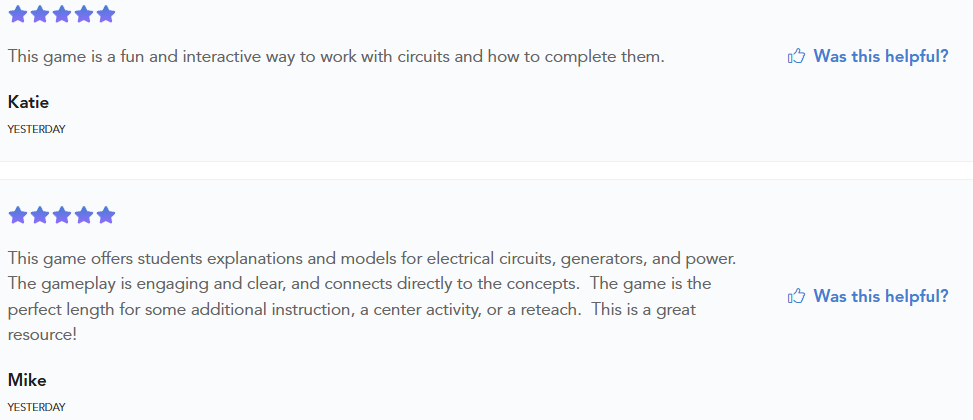
In this game, students restore a broken energy system by solving interactive puzzles focused on electrical energy. Players complete circuits, activate devices, and explore how energy flows through systems.

Space Volt Energy Online helps students understand current flow, energy transfer, and energy transformation in a visual and engaging way.

space-volt-energy-1
space-volt-energy-2
space-volt-energy-3

🌦️What’s The Weather? — Middle Science

whats-the-weather-1

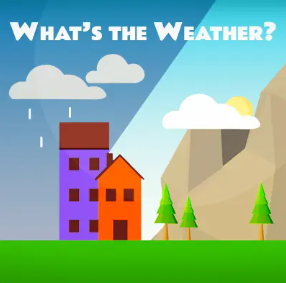
In What’s The Weather?, students join the Weather Investigation Bureau to solve real-world weather mysteries. By analyzing maps, tracking air masses, and observing patterns, players learn how weather systems develop and change.

This game builds understanding of the water cycle and weather patterns while encouraging critical thinking and data analysis.

whats-the-weather-2
whats-the-weather-3

🌎 Explore Learning Universe Games

Bring science to life in your classroom with interactive learning experiences your students will love.

New to Legends of Learnings? Sign up today and start exploring!

💬 Don’t forget — earn Reward Points by leaving reviews and help other educators discover the best games.

📩 Questions? Contact us anytime at support@legendsoflearning.com

Make Math Fun This May With New Interactive Classroom Games

Hi Legends! Welcome back to another exciting update from our Learning Universe! This May, we’re introducing a fresh lineup of math classroom games designed to boost engagement, strengthen foundational skills, and make learning feel like an adventure.

From early addition to fractions and ratios, these games help students build confidence through interactive, hands-on learning experiences that fit seamlessly into your classroom routine.

📚 If you missed last month’s new games, you can revisit April’s update to explore recent releases.

📐 New Math May Games

Turn math practice into play with engaging adventures that cover key concepts across grade levels, from basic operations to fractions, measurement, and ratios.

Grades K-2

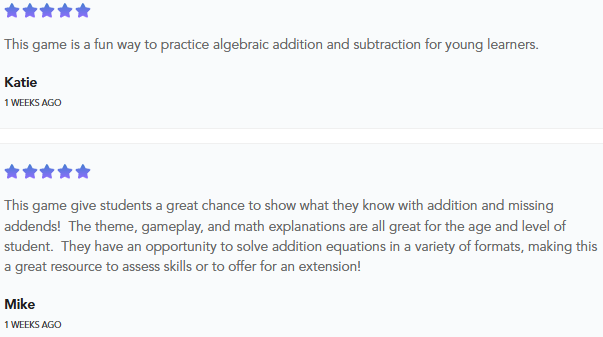
  • 🛡️ Plus Knight: Quest for Sum Crown. Join Plus Knight on an epic journey to recover the Sum Crown! Students practice addition and subtraction equations to defeat enemies and restore balance to Sumland.

Grades 3-5

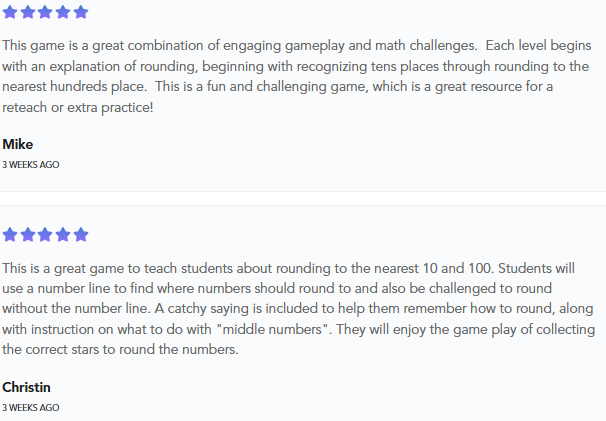
  • 🏃 Rounding Run: Race alongside Cubi in a fast-paced platformer where students master rounding to the nearest 10 or 100 by jumping across number lines.
  • 🌉 Bridge the Fraction: Build and repair bridges by adding and subtracting fractions. Students combine and break apart fractional pieces to complete structures.

Grades 6–8

  • 🧪 Ratio Ranch Slime Evolution: Mix slime recipes, evolve creatures, and load cargo ships while mastering ratio concepts and language in this creative math experience.

These math games turn learning into an interactive adventure! 🎉 Students build essential skills like addition, rounding, fractions, measurement, and ratios through meaningful challenges that keep them engaged.

🍎Teacher Tip: Turn Practice into Progress Tracking. Have students track which skills they practiced in each game (e.g., rounding, fractions, ratios). This helps reinforce learning goals and gives you quick insight into skill development.


🛡️Plus Knight: Quest for Sum Crown — Elementary Math

plus-knight-1

In Plus Knight, students help a brave hero recover the magical Sum Crown by solving addition and subtraction equations. Each correct answer powers attacks and helps defeat enemies along the journey.

This game builds fluency with basic operations while keeping students motivated through story-driven gameplay.

plus-knight-2
plus-knight-3


🏃 Rounding Run — Elementary Math

This game challenges students to think quickly as they jump across number lines to round numbers to the nearest 10 or 100.

Through fast-paced gameplay and visual number line models, students strengthen their understanding of rounding in a dynamic environment.

rounding-run-1
rounding-run-2
rounding-run-3


🤖 Unit Guardian: Stabilize the Learning Grid! — Elementary Math

unit-guardian-1

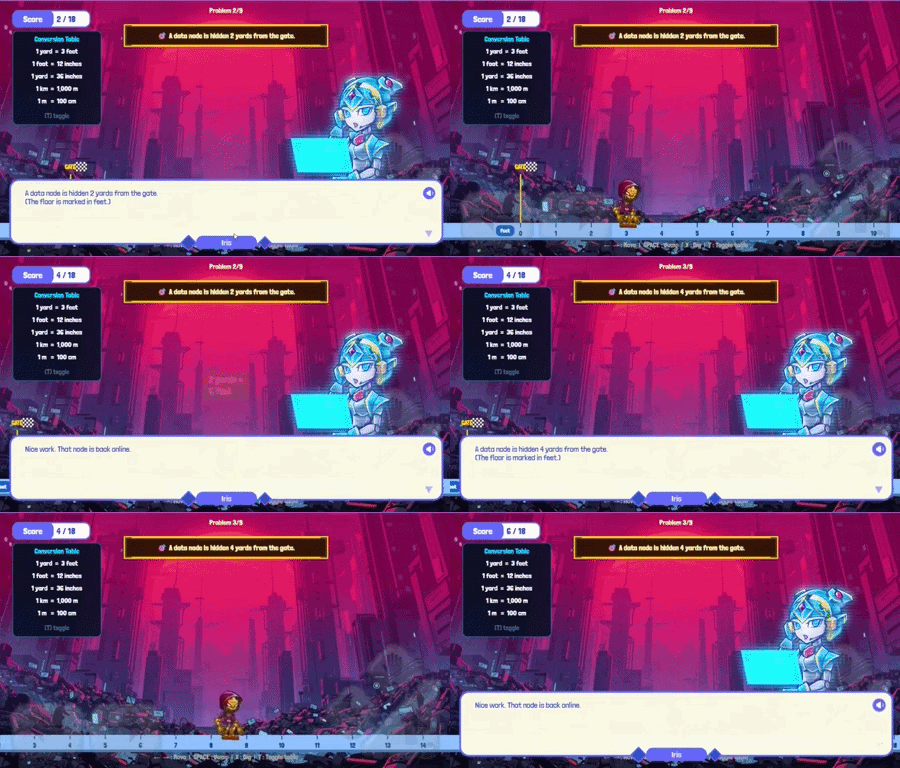
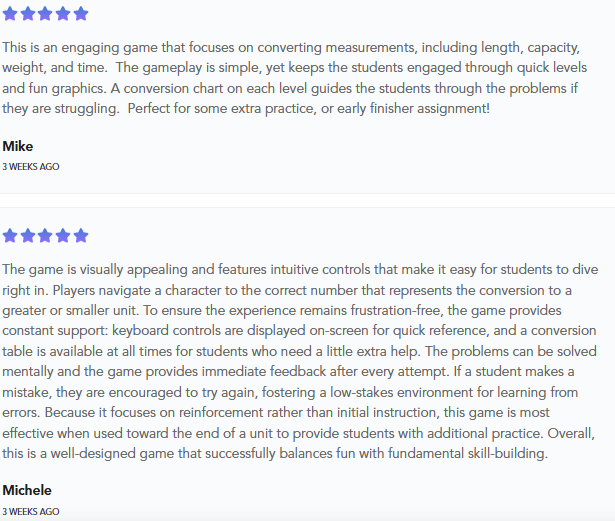
In this game students explore different sectors—Length, Weight, Capacity, and Time—to restore a disrupted system. By converting units and solving measurement challenges, they develop a deeper understanding of real-world math applications.

This game reinforces unit relationships and helps students build confidence in measurement conversions.

unit-guardian-2
unit-guardian-3


🎮 EXPLORE LEARNING UNIVERSE GAMES

Bring math to life in your classroom with interactive learning experiences your students will love.

New to Legends of Learning? Sign up today and start exploring!

💬 Don’t forget — earn Reward Points by leaving reviews and help other educators discover the best games.

📩 Questions? Contact us anytime at support@legendsoflearning.com

For Teachers
For Schools
For Districts