Our Solar System Lesson Plan

When you’re teaching students about space, Earth’s immediate surroundings are a good place to start. Cover the sun, other planets, their moons, and asteroids with the Our Solar System Learning Objective.

It includes a lesson plan created by science teachers, which you can download in PDF form or view below.

Lesson Plan: Our Solar System

NGSS Standard
ESS1.B-1: The solar system consists of the sun and a collection of objects, including planets, their moons, and asteroids that are held in orbit around the sun by its gravitational pull on them.

Objective

Students will be able to:

  • Explain the role of gravity in the solar system.
  • Explain the relationship between mass and gravity.
  • Predict the patterns of movement of objects in our solar system.
  • Accurately produce a 2D model of objects with varying masses that illustrates the relationship between gravity and mass.

Time Required:
85 minutes

Materials Needed

  • Teacher computer with internet access
  • Projector/Smartboard
  • 1 computer/laptop/iPad/Chromebook per student with internet access or BYOD (students can Bring Your Own Device)
  • Our Solar System and Gravity handout (attached)
  • 15 magnets (varying sizes are acceptable and encouraged if magnets are not the same size)
  • A magnetic object, such as a paperclip or the leg of a student’s chair

Teacher Preparation

  • Create a 30-minute playlist in Legends of Learning with the following games found in the Our Solar System learning objective (in order):
    • Around and Around (15-minute playtime)
    • The Sun, Moon and Stars: Patterns of Apparent Motion (11 minutes)
  • Create a 10-minute playlist in Legends of Learning with 5 assessment questions from the Our Solar System learning objective.
  • Make copies of Our Solar System and Gravity Worksheet (1 per student).
  • Gather materials for the Engage portion of the lesson.

Engage (15 minutes)

The teacher will show a magnet to the class.

  1. The teacher will use the magnet and a paper clip to show how the paper clip is attracted to the magnet.
    • The teacher will ask, “Is the magnet attracted to the paperclip, or is the paperclip attracted to the magnet?”
      • Allow students time to think before accepting any answers
      • Teachers should employ a random way of calling on students if no volunteers are available.
    • The teacher may guide/prompt students to the understanding that
      the paperclip is attracted to the magnet.
    • Using the magnets, and working in pairs or triads, the students
      should explore the classroom for other objects that are attracted to the
      magnet. Ask students to use different distances between the magnet
      and the object and to note the results.
    • Students should also use magnets of two different sizes to observe
      the results.
    • Once students are done (after 5 minutes), they should reflect (verbally or with written text) on the following prompts:
      • What types of objects were attracted to the magnet? Were the objects
        that were attracted to the magnet larger or smaller than the magnet? Is there a
        relationship between size and the amount of attractive force?
  2. The teacher will say “The activity you just did was modeling gravity. Gravity is a force of attraction. Why do you think I used a magnet to model gravity?”
    The teacher should employ a randomized process for calling on students. Only a couple (1 or 2) answers should be allowed at this point due to time. The teacher should say, “Gravity is a force of
    attraction.
    Today you will learn how gravity is used to keep objects in our solar system in constant, predictable patterns of motion, and the relationship between mass and gravity.”

Explore (20 minutes)

  1. Have your students sign in to Legends of Learning and enter your teacher code.
  2. Launch Playlist 1 for your students.
  3. As students complete Around and Around, students should fill out the Our Solar Sys>em and Gravity Handout; question #5 will be done during the Elaborate section of the 5E.
  4. Assist students as needed during gameplay, and pause the playlist if you need to address content or questions to the entire class.
    • The teacher may need to sit with struggling students in a group of no more than 4 to facilitate learning.

Explain (25 minutes)

  1. The teacher will review the answers from the Our Solar System and Gravity handout.
  2. The teacher will relate student knowledge to the demonstration at the beginning of class.
  3. It is important to remind students that the force of magnetism and gravity are not the same. However, to model the process on a small, observable scale, magnets were used to model gravity.
    • Why was a magnet used? A magnet was used to simulate a semi-attractive force between objects.
    • What objects in our solar system were being represented by the magnet? Any object in the solar system that has mass can be represented by a magnet.
    • Why was the paperclip attracted to the magnet? The magnet is bigger than the paperclip.
    • How does the relationship of size affect gravity? The bigger an object is, and the more mass it has, the more gravity it will exert on other objects.
    • Why does the larger magnet attract the smaller magnet? The larger magnet has a larger “force”.
    • Students should be able to answer the following:
      • Why are the planets kept in constant, predictable motion? The Sun’s gravity.
      • Why do all the planets orbit the Sun? The Sun is the most massive object in our solar system. Larger objects with more mass will attract more objects.

Elaborate (10 – 15 minutes)

  • Have students watch the video on gravity.
  • The teacher can clear up any misconceptions about gravity and mass at this point in the lesson.
  • Students complete question #5 on the Our Solar System and Gravity handout.

Evaluate (10 minutes)

  1. Launch Playlist 2 for your students. When they finish the assessment questions, any time left is free play.
  2. Analyze student results to determine what concepts need to be a focus for reteaching.

Our Solar System & Gravity

Name: _________________________

Directions:
While playing the second game in Legends of Learning called Around and Around, use what you learn to answer the questions below.

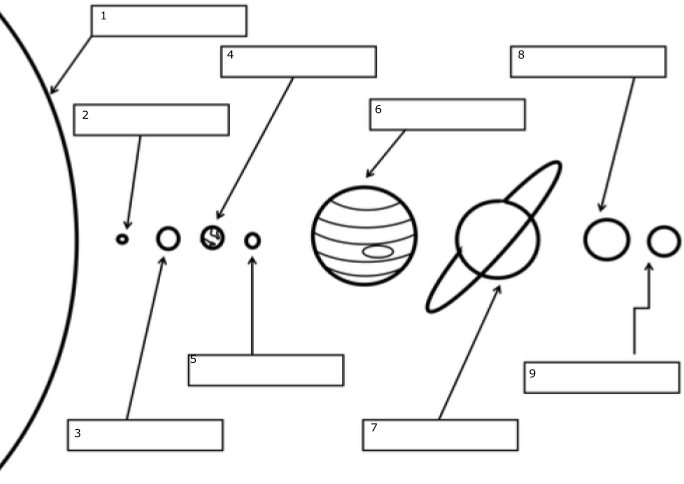
1. Label the planets in the correct order. Please note: The image is not to scale.
2. What are some of the components of our solar system that astronomers have studied? List some in the space provided.

  1. A.
  2. B.
  3. C.
  4. D.

3. What is the relationship between gravity and mass?

  1. A. The more mass an object has, the more gravity it will exert on another object.
  2. B. The more mass an object has, the less gravity it will exert on another object.
  3. C. The less gravity an object has, the more gravity it will exert on another object.
  4. D. The less gravity an object has, the less gravity it will exert on another object.

4. If two objects in space are close together, which of the following is true?

  1. A. Distance has no effect on gravity.
  2. B. The farther apart objects are will cause them to have greater gravity.
  3. C. The closer together objects are will cause them to have greater gravity.
  4. D. Gravity in space depends on how much light is being emitted from the objects.

This portion should be completed during the Elaborate portion of the 5E lesson.

5. Imagine that the solar system consisted ONLY of Jupiter, Mars, and Earth. How would Jupiter’s gravity affect the orbits of Mars and Earth? Draw and label your answer in the space below.
7.5 Ways to Use Legends of Learning Playlists

Game-based learning produces strong performance results and engagement. Playlists help teachers manage and deploy games for their classrooms to achieve those results. They are an incredibly versatile tool that provides strategic lesson plan architecture, real-time data and control, and performance analytics.

To help teachers we’ve compiled a list of the top seven (and a half) ways teachers can use playlists with their students:

1. Introduce science content – LoL playlists can provide a great introduction to new concepts. Each game contains a significant amount of content, so students can visualize new science concepts in a fun, interactive environment before listening to a lecture or opening a textbook.

2. Mid-unit refresh – After a few days of teaching the same topic, it can start to get stale for students. Reinforce and invigorate your lessons by deploying a playlist in the middle of the unit. Keep it fresh with a little fun!

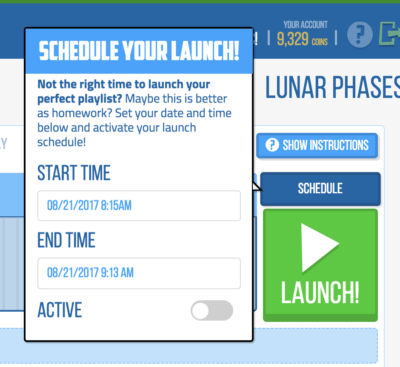
3. Homework – Looking for take-home exercises that don’t involve a worksheet? Now you can build a playlist and set it to launch at a future date, for a set period of time. Your students might even want to do their homework!

4. Monday warm-up – It’s amazing how much students can forget content over the weekend. Use games and quiz questions in Legends of Learning playlists to ease them back into the swing of learning science for the week.

5. Assess progress – One of the best features playlists offer are assessment questions. This item lets you gage student knowledge and progress anywhere in a playlist; before, after, or in between games. You will know whether students are getting the larger lesson or not in real-time.

6. Stations – If your students are rotating through stations, between labs and other activities, playlists are a perfect addition; you can build them to last as little as ten minutes. This is a good option for classrooms that do not have one-to-one device access.

7. Test Review – Study guides, jeopardy, and practice tests help students prepare for tests from many different angles. Playlists add another element, mixing engaging gameplay with strong subject matter review.

7.5. Past unit recall – In that same vein (thus, the 7.5), if your students need to review foundational concepts you taught them months ago, launch a playlist for their blast from the past! This can be particularly useful for highlighting NGSS Crosscutting Concepts (CCC), which you can read about on our blog.

You can learn more about playlists on our help site. Log in today, and create a playlist for your next lesson!

Hear Caitlin Unterman’s LoL Best Practices

Caitlin Unterman, a middle school science teacher in Forest, VA, is one of Legends of Learning’s most active teachers. Now you can hear how Caitlin uses Legends of Learning in her classroom during a special webinar on October 23rd at 4pm EST.

She has used the platform since day one, and hasn’t looked back. Caitlin will discuss deploying games in the classroom, building playlists, test preparation, and performance analytics. Participants will learn:

1) Implementing game based learning for topic reinforcement
2) Replacing study guides with game based resources
3) Assessing content mastery through gaming

Don’t miss this opportunity to learn from one of our strongest ambassadors. Register for Caitlin’s webinar today!

About Caitlin Unterman

Caitlin Unterman was the VAST Earth Science RISE Award winner in 2016 and Lynchburg’s Teacher of the Year in 2015. She also loves horses and owns several of her own. She is an employee of Bedford County Public Schools.

5 Questions Answered About LoL Playlists

This year, wow your class with game based learning by creating the perfect Legends of Learning playlist. Much like a DJ, teachers have the ability to deploy their “set list” of games and assessment questions to students. But playlists can do much more than that.

5 Most FAQs About Legends of Learning Playlists

To illustrate the power of this feature, we decided to answer teachers’ five most frequently asked questions.

1. How Can I Make Sure I’m Selecting The Right Games For My Student Playlists?

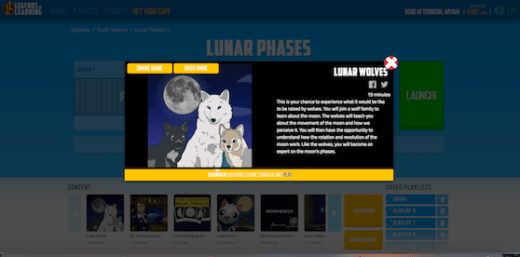
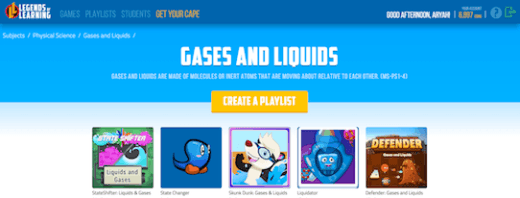
Selecting the right games based on student interest or academic level is easy with the detailed game modal window. Simply click on any game from within the learning objective screen and the game modal window displays a game overview, teacher ratings, curriculum suggestions, and the option to play the game yourself. When you’ve determined which games are the right fit, click the “Create a Playlist” button and drag the games into your new playlist.

Game Modal Window
lunar wolves instructions
Create A Playlist
gases and liquids courses


2. How Do I Customize My Playlists?

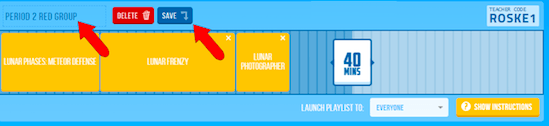
There are several ways to customize playlists for your students. First, name each playlist and add it to your saved playlists section for future use. Next, try dragging games into your playlist and then moving the games around by clicking and dragging. Finally, use the time slider to shorten or lengthen the amount of time students can play.

Customizable Playlist: Name It, Rearrange It, Time It
save and name a playlist


3. How Do I Launch My Playlists To Students?

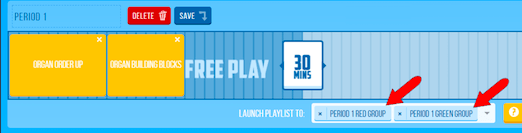
When you launch playlists to your students, you give them an engaging gameplay experience while following their progress in real time on your live teacher dashboard. You can even launch different games to different student groups and create a personalized gaming experience while ensuring they all master the same content.

Launch to Everyone

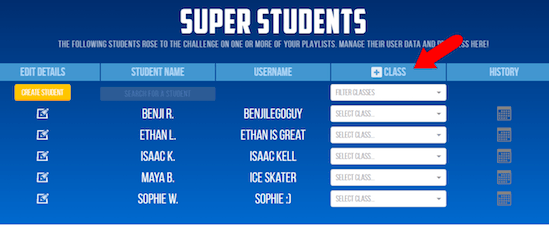
To get started, locate the dropdown menu under each playlist, which gives you the option to launch to everyone or to a specific group. To create a class or group, navigate to the students page and click the “+” button next to the word “class”. Type in the name of your class or group and press save. You can then click the dropdown next to each student and add them to their group.

Create Your Class
student playlist

Click the back button on your browser to return to your playlist. The names of your classes and groups will appear in the dropdown menu at the bottom of the playlist. When you launch your playlist to a specific group, only the students in that group will have access to the playlist.

Launch to a Class/Group
launch to group


4. How Do I Know Students Will Be Asked Questions During Game Play?

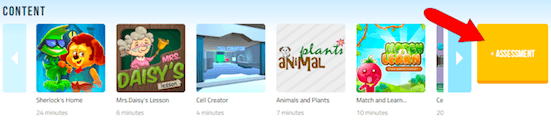
Assessment packs are valuable if you are playing games that are activity based and contain few questions. Click on the assessment icon next to the game list to add assessment packs to your playlist.

Assessment Pack Icon
assessment pack

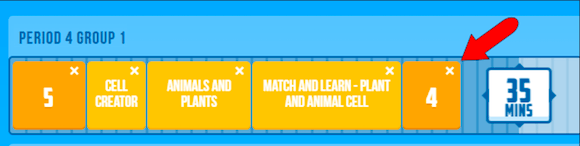
You can control the number of questions in each assessment—from 1 to 99—by clicking the arrows. Then, click and drag to place the assessment pack before, between, or after the games. Use multiple assessment packs and create a pre-test/post-test to gauge student mastery.

Assessment Pack as Pre-Test/Post-Test
pre-test and post-test assessment


5. How Do My Students Sign In & Start Playing?

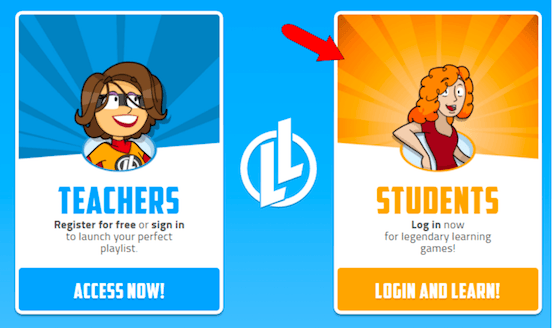
Students sign in to your playlist by navigating to login.legendsoflearning.com and clicking the students icon. Students are then prompted to enter your teacher launch code, located in the upper right hand corner of your playlist.

Teacher Launch Code
teachers launch code

Students sign up using their first name and last initial, or sign in with their previously created username.

Student Login Page
student login page

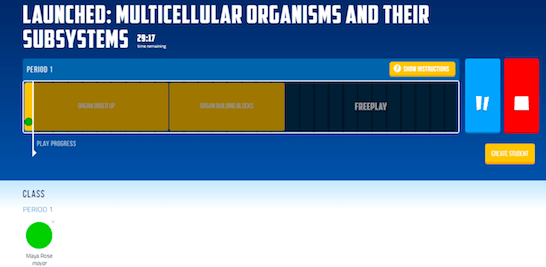
Once you launch your playlist, each student’s dot appears in your live teacher dashboard. Individual student answers to game and assessment pack questions are recorded inside student dots.

Live Dashboard with Student Signed In
live dashboard with student signed in


Create Your Perfect Playlist Today!

Legends of Learning strongly values the feedback of teachers and welcomes any questions you have on our playlist feature. Login today to create your perfect playlist. Have a great summer and happy gaming!

Lesson Plan: Eclipses and Seasons

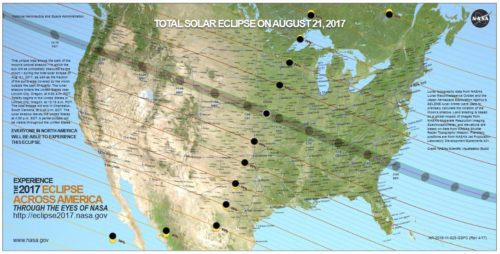
On August 21, 2017, we’ll see something the country has not seen in 38 years: a total solar eclipse. The day will be an exciting one for students and science teachers, alike. Let’s make it educational, too.

People across the country are looking forward to watching the sun completely disappear behind the moon. The total solar eclipse will darken skies from Oregon to South Carolina, an extremely rare event that for some locations on earth may occur as infrequently as every 1,000 years!

Legends of Learning has developed a lesson plan for the Eclipses and Seasons Learning Objective that you can use with your students. With it, we’re offering two of our games — “Walter’s Travels” and “Bubble Eclipse” — publicly on our Alpha Games page.

Complete with digital edgames playlists, assessment questions, and a visual eclipse simulation, our lesson plan has everything your students need to learn about this rare phenomenon. Check it out below, or download the PDF version!

Learning Objective: Eclipses & Seasons

NGSS Standard DCI
MS-ESS1.B-2. – This model of the solar system can explain eclipses of the sun and the moon. Earth’s spin axis is fixed in direction over the short-term but tilted relative to its orbit around the sun. The seasons are a result of that tilt and are caused by the differential intensity of sunlight on different areas of Earth across the year.

Objective

Students will be able to:

  1. Explain why solar and lunar eclipses occur
  2. Explain why Earth has seasons
  3. Draw and manipulate models of solar and lunar eclipses
  4. Draw a model of Earth’s location during various seasons

Time Required:
75 minutes

Materials Needed

  • Small beach ball (or other similar sized ball)
  • Ping pong ball tied to a string
  • Flashlight
  • Teacher computer with internet access
  • Projector/Smartboard
  • 1 computer/laptop/iPad per student with internet access
  • Eclipses and Seasons handout (attached)

Teacher Preparation

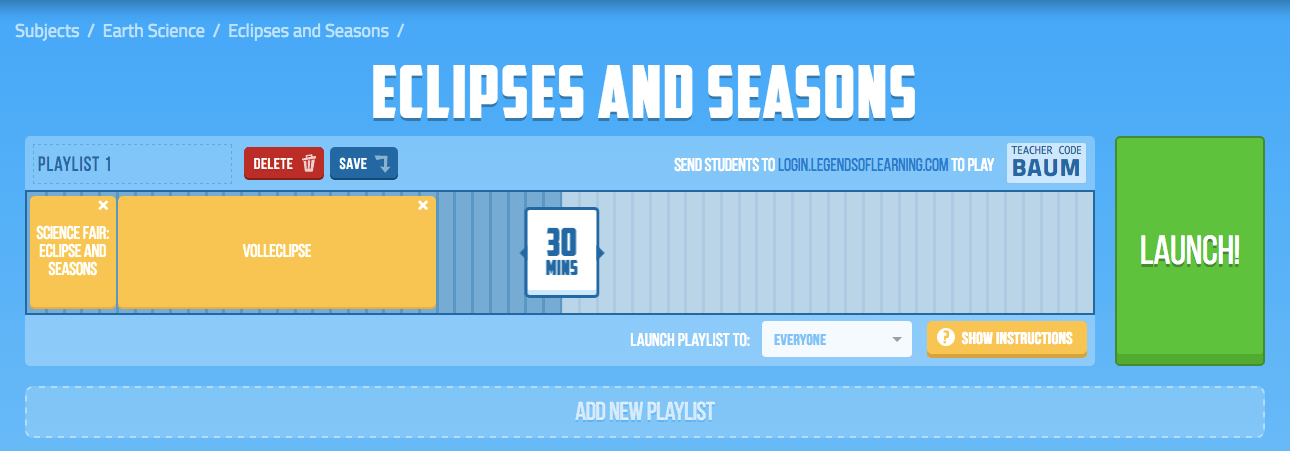
  • Create Playlist 1, a 30-minute playlist in Legends of Learning with the following games found in the Eclipses and Seasons learning objective (in order):
  1. Science Fair: Eclipse and Seasons
  2. Volleclipse

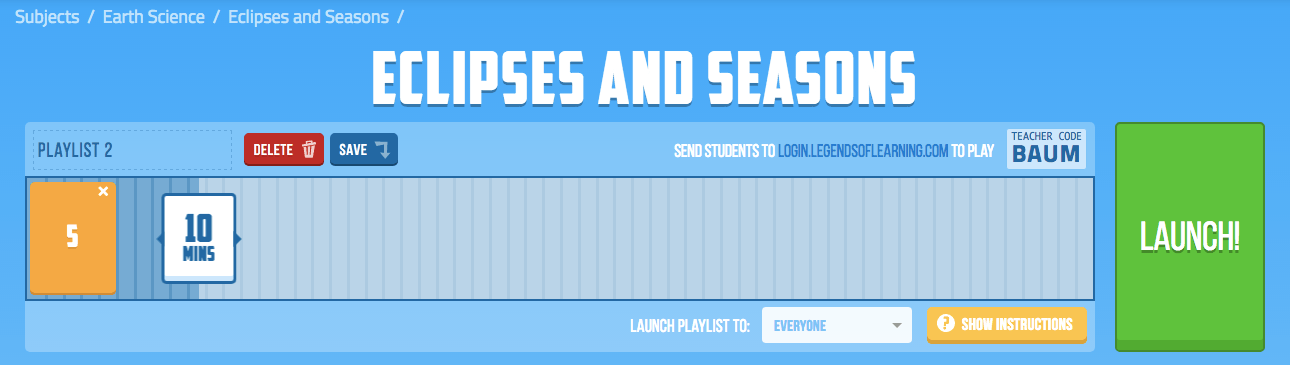
  • Create Playlist 2, a 10-minute playlist in Legends of Learning with 5 assessment questions from the Eclipses and Seasons learning objective
  • Make copies of Eclipses and Seasons Worksheet (1 per student)

Engage (10 minutes)

  1. Lay the flashlight on a table and place the beach ball approximately 24 inches in front of the flashlight.
  2. Turn off the lights in the room and turn on the flashlight.
  3. Holding the ping pong ball by the string, place the ping pong ball between the flashlight and the beach ball.
  4. Ask for student observations regarding where they see the light hitting the beach ball and where they see shadow.
    • Answer: Light hitting the ping pong ball and beach ball. Small shadow on front of beach ball as well.
  5. Continue holding the ping pong ball by the string, move the ping pong ball so that it is behind the beach ball.
  6. Ask for student observations regarding where they see the light and shadow in this position.
    • Answer: Light hitting the beach ball fully, no shadow on the beach ball. Full shadow on the ping pong ball.

Explain to students: “I just demonstrated a phenomenon called an eclipse. Today we will learn about types of eclipses and also review why we have seasons. Think about this demonstration during today’s lesson as we will refer back to it at the end of class.”

Explore (30 minutes)

  • Have your students sign in to Legends of Learning and enter your teacher code.
  • Launch Playlist 1 to your students.
  • As students complete Science Fair: Eclipse and Seasons, students should fill out the Eclipses and Seasons Handout.
  • Assist students as needed during game play, pause playlist if you need to address content or questions to entire class.

Explain (20 minutes)

  • Review answers to Eclipses and Seasons Handout by drawing diagrams on board or using Smartboard.
  • Relate student knowledge to demonstration at the beginning of class.
    • Which item represents the sun? (flashlight)
    • Which item represents the earth? (beach ball)
    • Which item represents the moon? (ping pong ball)
    • Who can demonstrate a lunar eclipse using the items? (ping pong ball held behind the beach ball)
      1. Have student explain why
    • Who can demonstrate a solar eclipse using the items? (ping pong ball held between the flashlight and beach ball)
      1. Have student explain why

Elaborate (5 minutes)

  • Explain to students that although they experience seasons all the time, they are less likely to experience a lunar eclipse, and the opportunity to experience a solar eclipse is even more rare.
  • Show this timelapse video of what happens on Earth during a solar eclipse: https://vimeo.com/53641212
  • Ask students to describe what they are seeing in the video.
    • Answer: It is broad daylight then goes dark like nighttime, then back to broad daylight very quickly. The sun is completely blocked out for a while.

Evaluate (10 minutes)

  • Launch Playlist 2 to your students. When they finish the assessment questions, any time left is freeplay.
  • Analyze student results to determine what concepts need to be a focus for reteaching.

Seasons & Eclipses: Worksheet


Name: _________________________________


Directions:
While playing the first game in Legends of Learning called Science Fair: Eclipse and Seasons, use what you learn to complete the diagrams and answer the questions below.

Seasons

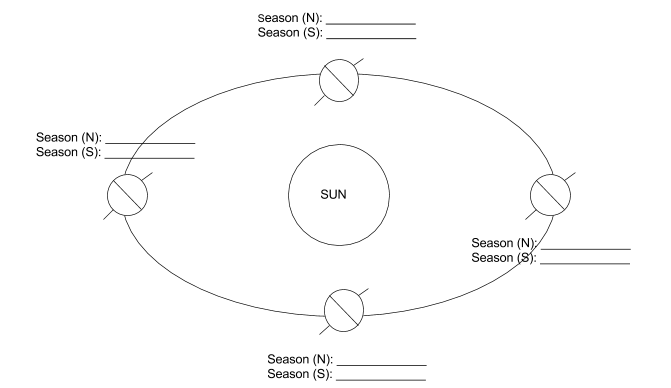
Label the seasons in the Northern and Southern hemisphere at each location.

Circle the correct answer

  1. Question 1: It is summer for the hemisphere that is pointing (away from, towards) the sun.
  2. Question 2: It is winter for the hemisphere that is pointing (away from, towards) the sun.
  3. Question 3: When a hemisphere is pointing towards the sun, the sun’s rays are (stronger, weaker) on that part of earth, making it (hotter, colder).
  4. Question 4: When a hemisphere is pointing away from the sun, the sun’s rays are (stronger, weaker) on that part of earth, making it (hotter, colder).

Draw the location of the sun, moon, and earth during a lunar eclipse and during a solar eclipse. MAKE SURE YOU LABEL THE SUN, MOON, AND EARTH!

Summer Learning Day: $300 Game Trial

National Summer Learning Day is just a month away! What are you doing to celebrate? Legends of Learning is extending its $300 trial offer until July 13 to help teachers and students better enjoy summer learning.

Students enrolled in summer class need a break from the daily routine, and Legends of Learning middle school science games are a great tool. Games offer kids an opportunity to enjoy summer school a little more, while simultaneously improving subject mastery. Original research backs up the impact of games!

Summer is a critical time for students to stay on track and close achievement gaps. Strengthening learning programs can give districts, teachers, parents, and students a much-needed boost. For more information, check out our summer learning white paper.

The National Summer Learning Association reports most families not participating in a summer program say they would if one was available, but the average cost of these programs is $288 per student per week.

As part of its launch, Legends of Learning provided teachers who signed up on its platform $300 worth of edgames for free. After July 13th, initial trial coins will be reduced to $100 for free.

Sign up for free games today!

Summer School Science Content for Free

Let’s be honest. Summer school can be a drag for students. Why not liven up the classroom with middle school science content for free? Let’s play!

With Legends of Learning’s $100 in complimentary game coins and no obligations, teachers (and schools) have nothing to lose. In six weeks, a class of 30 students could play a game every school day and there would still be extra credits left over.

Science games offer kids an opportunity to enjoy summer school a little more and play games that facilitate learning and subject mastery. Teachers address NGSS and state standards while providing fun and engagement.

There are 900 games currently available in 90 lessons spanning Earth and Space, Life, and Physical Sciences learning objectives. If you are teaching any middle school science content, there is a game for you. Log in or create an account today, and explore our library.

Make summer school a more engaging experience than the average class. Your students will appreciate it, and their test scores will improve. Just press play.

P.S. If you are looking for more ways to make summer learning a fun experience, download our white paper, “How to Prevent Summer Learning Loss and Close Achievement Gaps.”

Six Tips for Shaking Up Summer Learning This Year

Excerpted from How to Prevent Summer Learning Loss and Close Achievement Gaps. Download it today.

By the end of May, everyone is ready for a break from the school routine. Students stop responding to the usual content delivery methods, and as a result, summer learning loss sets in.

So change up your methods.

Develop summer courses that meet learning needs and curriculum standards while providing fun and engagement. Fun and engagement can take many forms, from project based learning to field trips to digital gaming. For example, Legends of Learning science games provide an interactive learning experience for students with questions aligned to curriculum standards. The teaching methods vary but should be aligned with your district’s overarching academic goals.

To help you get started, here are six quick tips to add a little variety to your summer learning programs.

Six Tips For Your Summer Learning Experience

1) Focus on Individualized, Personalized Instruction. Limiting summer class size allows teachers and students to interact one-on-one more often. As a result, relationships develop; students are encouraged to learn and grow; and teachers guide students toward classroom lessons and activities that fit the individual student’s learning level and style.

2) Take Kids on Field Trips. Teachers demonstrate learning is fun through field trips. Such trips can occur within the community and range from the zoo to a local bottling company. If funds are tight, supplement off-campus field trips with digital ones. Google and Discovery, for example, offer digital field trips that take place in the Sahara, Antarctica, and other locations.

3) Invite Speakers to the School Campus. Students see how curriculum lessons translate to life skills when people talk about their day-to-day work. Teachers could invite civic leaders, parents, and other people into the classroom to talk about their work experiences and background. Microsoft also provides experts for the classroom via Skype. Kids can hear from environmentalists, coastal engineers, and other pioneers in the arts and sciences.

4) Turn Facts into Skills with Hands-On Projects. Students learn what they live, so teachers should find ways to turn basic concepts into practical skills. Some schools facilitate this idea with community projects, such as a garden or recycling center. Some schools, though, involve students in activities like building a greenhouse or small-scale wind farm. Others take their students to community partners where they participate in activities and projects.

5) Keep Kids Engaged Inside and Outside the Classroom with Digital Games. Kids like games. Teachers often do, too. Edgames offer chances to connect with students on their level. Kids play online games all the time, so giving them games that facilitate learning and subject mastery is a no-brainer. Plus, edgames typically allow teachers and district administrators to monitor student progress and, depending on the implementation, keep budget costs low.

6) Test New Teaching Models and Classroom Layouts. Summer provides a perfect time to pilot new teaching models, methods, and classroom layouts, says Gary Huggins, CEO of the National Summer Learning Association. Explore blended learning models, edgames platforms, and other ways to engage students and build digital literacy skills. Assess impact at the end of the summer and expand what works into an official instructional approach.

No matter which method(s) you employ, remember that students are drawn in by new experiences. If you surprise them each day with even a small tweak to your instructional methods you will see a huge increase in student engagement. Try Legends of Learning science games and you will see some very excited looks on students faces. Have a great summer and shake it up!

Legends of Learning in the News

1. District Administration – Science-focused platform and game content to be released
In March 2017, Legends of Learning released its educational games (edgames) platform in 100 middle schools across the country. The games meet the standards for middle school science curricula, and CEO Vadim Polikov conducted a 1,000-student study in partnership with Vanderbilt University to demonstrate the games’ efficacy and ability to engage students.

Polikov will facilitate additional surveys and studies to provide more evidence in support of the Legends of Learning methodology in the near future. He explains, “Educators’ time is at a premium now, so providing them with something that is demonstrably effective and easy to use has a far greater chance of being implemented.”

But don’t take his word for it. Talk to one of the hundreds of teachers in the Legends of Learning Ambassador program, or better yet, start using the platform and become an Ambassador yourself!

2. DC Inno – Oregon Trail-Inspired Startup Wants More Video Games In Schools
“Who would’ve thought that one day Oregon Trail would inspire someone to start a company?” asked Samantha Sabin, staff writer at DC Inno. She was amazed at how Legends of Learning co-founders Josh Goldberg, Geoff Livingston, and Vadim Polikov formed their educational technology (EdTech) company.

The three men hypothesized curriculum-based edgames could engage kids in learning, and tested the theory in conjunction with Vanderbilt University researchers prior to establishing the company. The study showed vast improvements in test scores for students who played the games. Once the results were in, Legends of Learning launched their edgames platform in March 2017.

3. USA Today – ‘Spotify for learning games’ coming to classrooms
On March 27, 2017, Legends of Learning launched its edgames platform, an easy-to-use interface featuring 900 middle school science games for today’s classrooms. The company calls the platform “Spotify for learning games.”

Game developers, or “artists,” create standards-based games for “listeners”—teachers, administrators, and students. Teachers can earn free access to the platform in exchange for providing the developers with feedback.

Additionally, schools can pay about $10 per student for a learning management system (LMS) that measures student progress in the games. USA Today calls the platform “an all-you-can-eat menu of games,” and teachers like Rebecca from upstate New York agree – students playing the games are hungry to learn!

4. Getting Smart – Innovation in Education Is More than a New Approach
CEO Vadim Polikov writes that Legends of Learning brings a new strategy to education innovation: academic research. He hypothesized that edgames could improve student engagement in the classroom and put the theory to the test with help from Vanderbilt University.

The study provided Polikov with the evidence needed to establish Legends of Learning, a company that provides an online edgames platform that teachers use to bring games into their classrooms. Polikov’s work also contributes to the broader academic literature, with potentially massive implications for the future of education.

Another huge point of emphasis is ease of implementation. With an idea like this, Polikov says, “When it is easy and obvious, the barriers to widespread acceptance are much lower.” Legends of Learning achieves this with its intuitive platform, which is easy to use for students and teachers alike.

5. WTOP – DC startup Legends of Learning aims to be ‘Netflix’ for educational games
Legends of Learning provides all the ease and entertainment of Netflix and Amazon with its online edgames platform, amplifying productivity, engagement, and learning in the classroom. The platform hosts 900 games and counting, all of which are based on curriculum standards – NGSS, TEKS, SOL, and more.

The Legends of Learning platform is free for teachers as long as they provide feedback to help developers improve the games. Schools have the option to track student progress for a low-cost subscription fee.

6. EdTech Mag – Q&A: Vadim Polikov’s Startup Brings Game-Based Learning to Science Class
EdTech Magazine asked CEO Vadim Polikov what inspired him to form Legends of Learning, an EdTech company that provides curriculum-based games for classrooms across the country. He replied with his own childhood experience, stating, “To this day, I don’t remember what I learned in eighth-grade history, but I am a history buff because I played Civilization.”

Polikov’s background as a research scientist led him to explore why the game impacted him so. He partnered with Vanderbilt University to assess how edgames affected students and learned that games truly do, qualitatively and quantatively, increase engagement and test sores.

7. Baltimore Sun – Legends of Learning raises $9 million for expansion
In April 2017, DC- and Baltimore-based EdTech startup Legends of Learning announced it had raised $9 million from investors, including the Baltimore Angels. Legends of Learning will use the funds to expand the platform and related services, such as analytics and tracking. The company will also add employees to grow its library of games into other school subjects and grade levels and to serve more schools.

8. Baltimore Business Journal – Former Astrum Solar exec raises $9M for edtech startup
Legends of Learning, a new EdTech startup in Washington, D.C. and Baltimore, closed a successful seed funding round totaling $9 million. The company offers an online platform for edgames – 900 of them, so far – supporting the middle school science curriculum. The seed money will be used to expand into other subjects and grade levels and to hire new company employees.

9. Potomac Tech Wire – “Today’s top story: Edtech Startup Legends of Learning Raises $9 Million in Seed Round”
A DC- and Baltimore-headquartered startup, Legends of Learning, reported $9 million in seed funding for its online education games platform. The platform features 900 games across the middle school science curriculum. The seed money will allow the company to expand into more grades and subjects, as well as conduct additional studies on game-based learning and its impact on student engagement and achievement.

10. DC Inno – The DC Inno Beat: NEW MONEY
Legends of Learning, a DC EdTech startup that offers learning games based on Next Generation Science Standards (NGSS), is poised to grow. Thanks to a strong $9 million round of seed funding, the company will grow its staff from 14 employees to 30. It will also develop games for other grade levels and school subjects.

11. Technical.ly – DC edtech company Legends of Learning has raised $9 million in seed funding
In March 2017, EdTech company Legends of Learning released its online platform containing 900 middle school science games for the classroom. At the same time, it raised $9 million in seed funding. The funds are earmarked for growth; the company will be hiring new employees in the spring and summer to expand into subjects across all K-12 grade levels.

12. EdWeek – Do Digital Games Improve Children’s Math Skills?
Students in Florida’s Hillsborough County schools are showing improvements in math after using classroom games such as TiViTz. In addition to higher achievement, teachers are reporting increased enthusiasm among students playing these edgames.

A 2014 study showed that nearly three quarters of K-8 teachers nationwide are using digital games in their classrooms. Related studies, like the one conducted by Legends of Learning founder and CEO Vadim Polikov, have demonstrated strong positive correlations in student achievement – and enjoyment – with the use of digital edgames.

13. EdWeek Market Brief – K-12 Dealmaking: EVERFI Raises $190 Million; Legends of Learning, Marco Polo Raise Funds
Legends of Learning, a new edgames company that launched in March 2017, raised $9 million in its most recent round of seed funding. The company brings research-driven, curriculum-based games to schools.

Its 900 games cover a variety of middle school science topics. With the new funds, Legends of Learning will expand to more subjects throughout K-12 curricula.

14. EdSurge – New Research Proves Game-Based Learning Works—Here’s Why That Matters
In order to successfully implement game-based learning (GBL) in classrooms, edgames must engage students while also supporting curriculum standards. Prior to founding Legends of Learning – an education startup with a curriculum-based GBL platform – Vadim Polikov led an academic study with Vanderbilt University researchers to determine the efficacy of the company’s approach.

The study found that students who played edgames were more engaged in the classroom, and performed significantly better on standardized tests, than those who didn’t play. Polikov has a second, larger study in the works to continue to examine the efficacy of GBL. Research like this is critical in adopting of new, innovative techniques in the classroom, and advancing education in America.

15. EdSurge – How to Roll Out Game-Based Learning—and Boost Engagement—in Your Classroom
Before launching Legends of Learning, an EdTech startup that provides GBL content for classrooms, CEO Vadim Polikov teamed up with researchers at Vanderbilt University to conduct a control study with more than 1,000 8th grade student participants. Students who played the edgames demonstrated stronger understanding of classroom subject matter and scored higher on standardized tests than those who didn’t play. Teachers also reported that students – including those who were normally less engaged in class – had more organic conversations about the subject matter while playing, and had fun doing it!

16. EdSurge – Classroom Gaming Should Be Engaging, Tied to Curriculum—and Not Require Teachers to Code
In order for edgames to be effective, they must be easy for teachers to implement. This can only happen when the games supplement lesson plans with engaging, curriculum-based content.

New education startup Legends of Learning focuses on efficacy, delivering easy-to-use games that adhere to NGSS curricula and fit into short class periods. Before founding the company, Vadim Polikov partnered with Vanderbilt University researchers to conduct a large-sample control study.

The results were promising for both teachers and students, and led Polikov to launch Legends of Learning in March 2017. The company’s platform hosts 900 edgames, and teachers who use it say students are showing improved classroom engagement and better grasp of difficult concepts.

Teacher Appreciation Day: Here’s to You, Teachers

Tuesday, May 9th, is Teacher Appreciation Day (sponsored by the National Education Association (NEA), a moment in which we stop to honor the incredible commitment of our nations’ teachers.

The day coincides with the National Parent Teacher Association’s (PTA) National Teacher Appreciation Week, held during May 8th-12th.

Teachers should be recognized for their hard work and service.

Throughout the week, parents and students make cards and deliver candy. District administrators typically provide a catered lunch or breakfast for teachers and staff. This year, the PTA increases the fun and excitement with its #ThankATeacher contest. Federal, state, and local governments get in on the action, too, with teacher of the year awards like the one managed by the Council of Chief State School Officers (CCSSO).

Teachers Should Be Celebrated All Year Long

These things are wonderful. However, teachers should also be celebrated throughout the rest of the year. Teachers play a vital role in the lives of young people, imparting the skills and knowledge students need to reach a bright future. But teachers far exceed that role—they often are surrogate parents, therapists, sales people, and legends.

As Donald Quinn, a former educator, tells it:

If a doctor, lawyer, or dentist had 40 people in his office at one time, all of whom had different needs and some whom didn’t want to be there and were causing trouble, and the doctor, lawyer, or dentist, without assistance, had to treat them all with professional excellence for nine months, then he might have some conception of the classroom teacher’s job.

This year alone, more than 3.5 million teachers across the country will teach 55+ million students. That equates to billions of graded papers, lesson plans, student coaching, calls to parents, teacher-parent conferences, field trips, and more. A teacher’s job is never done, not even when the bell rings and school lets out for the afternoon.

The average teacher works 12-16 hours a day and spends about $500 of their personal earnings on school supplies every year. Their take home pay averages around $49,000. One thing is clear about the teaching profession: Teachers aren’t in it for the money.

Teachers Share How to Celebrate Them

So how can we appreciate teachers every day? Teachers provide an answer. They want to be listened and responded to. Teachers are the keys to success of any school. When they feel empowered by the district administration and supported by the community, they achieve the impossible in their classrooms.

At Legends of Learning, we know the theory as fact because we quite literally listen to teachers. Their feedback and ongoing conversations with our game developers and Ambassadors affect the games we publish. For us, listening is a way to simultaneously honor teachers, create a product that impacts the classroom, and change education for the better for everyone.

Here are some examples of the great things our teacher Ambassadors are doing with the Legends of Learning edgames platform.

Shanda Seibel, 5th Grade Teacher, Prarie Creek Elementary

Shanda gets her students excited about human impacts on Earth’s systems with games including The Big Picture Hosted by Zedd: Animal Agriculture and Skunk Dunk: Increasing & Decreasing Human Impacts. “Legends of Learning games give students the opportunity to learn their science skills and vocabulary in a fun and engaging way” says Shanda. “Students are in a generation of gaming. I found this year that Legends of Learning brought as much engagement as my science experiments.”

Kerrie Seberg, 7th/8th Grade Science Teacher, Walter G Byers School

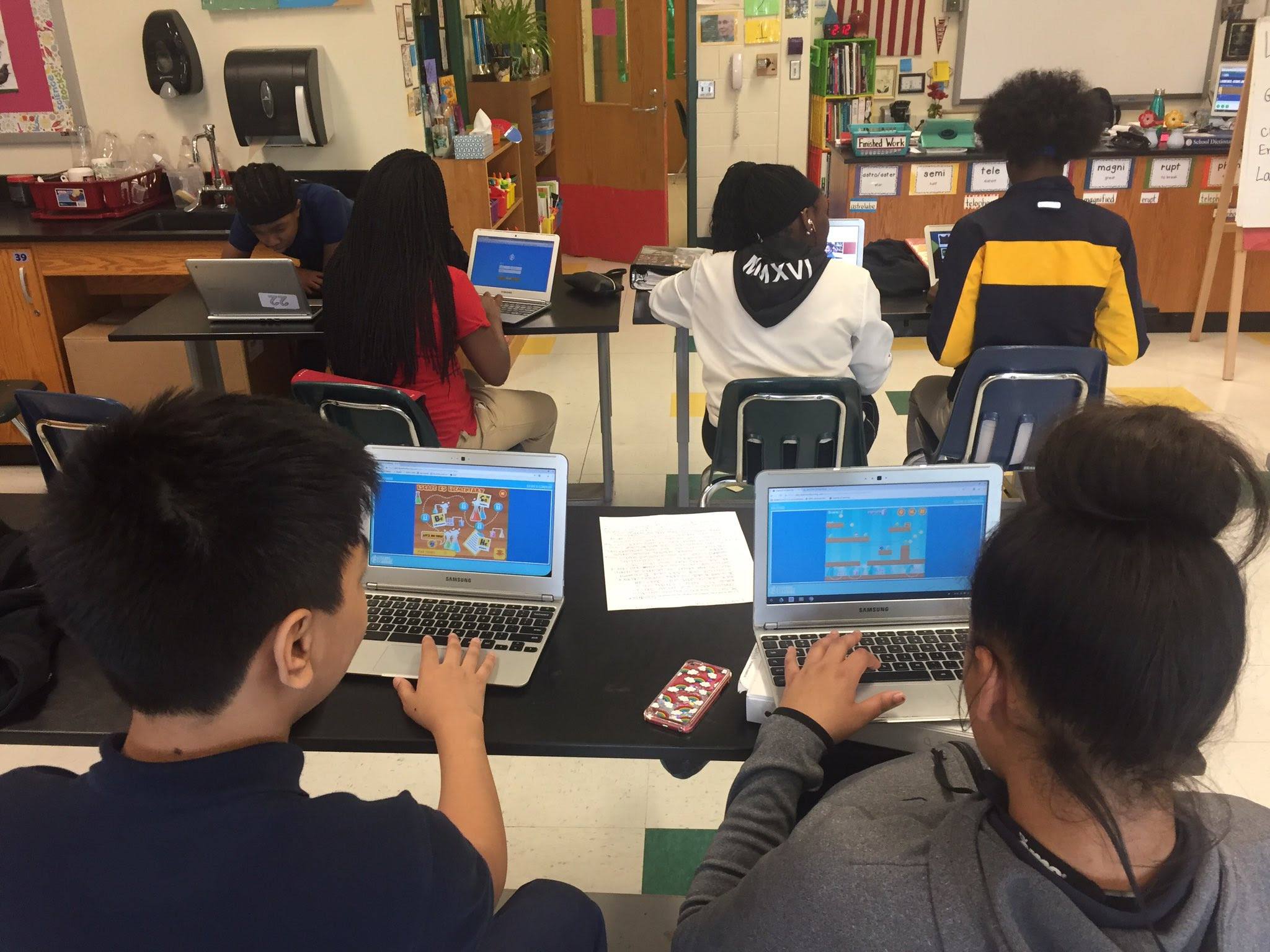
Kerrie reviews the structure of the atom with her students in the game “Escape is Elementary.” “They love how the game is like Mario!!” says Kerrie. “Personally, I loved how they were overheard debating the definition of ‘subatomic particle!’”

Mariana Garcia-Serrato, 7th/8th Grade Lead Science Teacher, Adventure Program

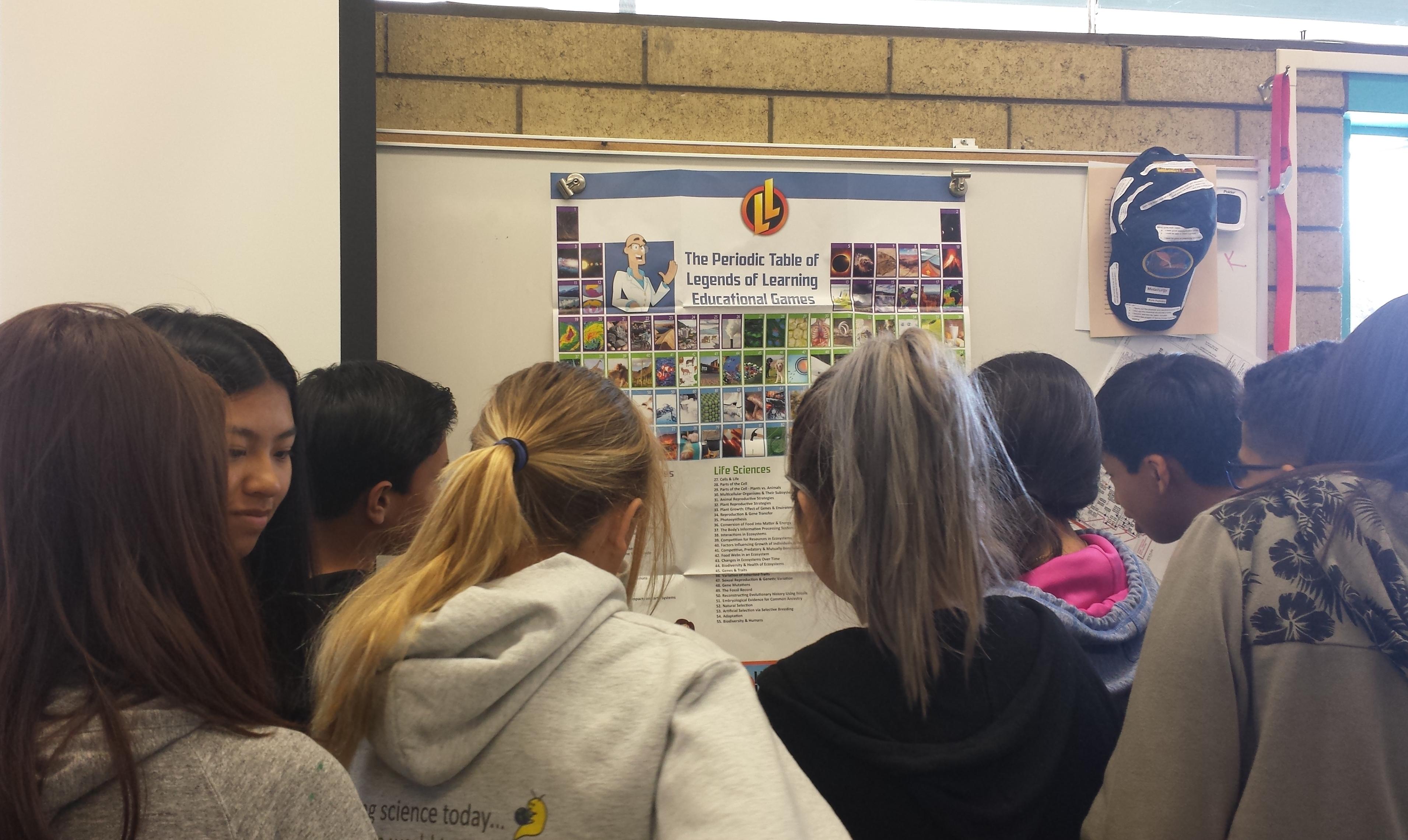
Mariana discovers that students love test review, especially when it means choosing their own edgames. For test prep in 8th grade, I displayed the complete list of LOL learning objectives,” said Mariana Garcia-Serrato, a middle school science teacher in California. “Having that list of discrete learning objectives proved an easy way for them to decide what to study!”

You can log in and play these games today on the Legends of Learning platform. To become an Ambassador, visit our site and fill out this simple form.

We hope you have a fantastic Teacher Appreciation Day. Thank you for all you do inside the classroom and out!

For Teachers
For Schools
For Districts