Hi Legends! 👋 Welcome back to another update. This July we’re adding three new middle school science games for grades 6–8 — and they put students inside the investigation, not just in front of a textbook.
Science in grades 6–8 hits a tricky stretch in July — labs wind down, attention drifts, and concepts like hypothesis testing or electromagnetism start to feel like vocabulary lists instead of ideas students can actually use.
This month our K-8 Learning Universe adds three new middle school science games for grades 6–8 that put students inside the investigation. Bowling lanes, asteroid fields, and dig sites included.
📚 If you missed last month’s releases, revisit June’s science update to explore recent games.
🧪 New Middle School Science Games for July
Get ready to bring fresh energy into your classroom, summer learning program, or review days with these engaging science classroom games!
Grades 6–8
-
Bowling Method: Investigate a bowling challenge like a real scientist! Students explore the Scientific Method through observation, hypothesis, experiment, data analysis, and communication.
-
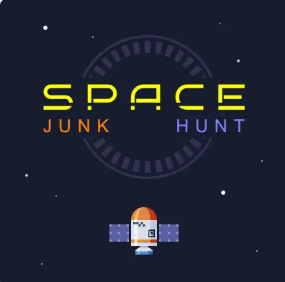
Space Junk Hunt: Pilot a spaceship through hazardous asteroid fields using electric charges and electromagnets! Students explore Electric and Magnetic Forces through attraction, repulsion, and electromagnetism.
-
Fossil Hunter: Dig for fossils and uncover Earth’s history! Students explore the Fossil Record by excavating fossils and using rock layers to determine relative ages.
Play games
💡 Teacher Tip: Use these games during centers, early finisher rotations, summer learning activities, or back-to-school review days. After gameplay, ask students to explain one scientific concept they observed, a simple way to reinforce vocabulary and check understanding.
Why These Topics Work Better as Games
The scientific method is a process, not a paragraph. Students need repetition across different scenarios before “form a hypothesis” becomes something they do automatically. Bowling Method gives them that repetition inside a low-stakes environment they already understand.
Forces and electromagnetism are invisible until something moves. Space Junk Hunt makes charge and magnetism visible and consequential — miss the repulsion window and your ship doesn’t make it through the field.
The fossil record asks students to reason backward through time. Fossil Hunter turns stratigraphy into a puzzle: dig deeper, compare layers, figure out what came first.
These aren’t review drills dressed up with graphics. Each game is built around a specific NGSS-aligned concept and asks students to do the science, not just recall it.
😎 A Closer Look at Our Middle School Science Games
These new middle school science games turn learning into an interactive adventure! 🎉
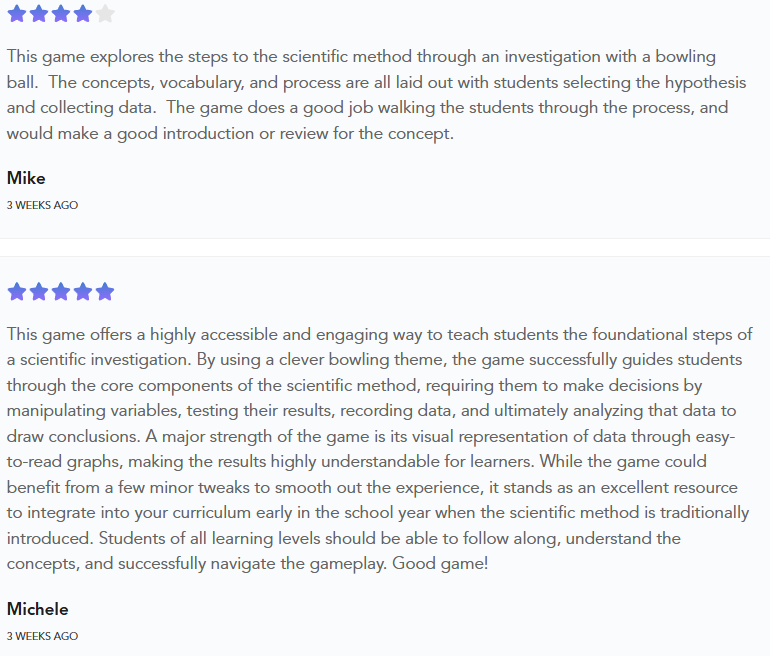
🎳 Bowling Method — Grades 6–8 Science
That’s the heart of Bowling Method: inquiry disguised as a sport. Players observe, hypothesize, experiment, analyze, and communicate findings — the full scientific method loop — without it ever feeling like a worksheet labeled “Lab Report.”
Best for: Introducing or reinforcing the scientific method, discussing quantitative vs. qualitative data, or opening a unit on variables and fair testing.
Try this after gameplay: Ask pairs to defend one conclusion using only data from their last three throws. If two groups got different results, have them explain why — that’s where the real science conversation starts.
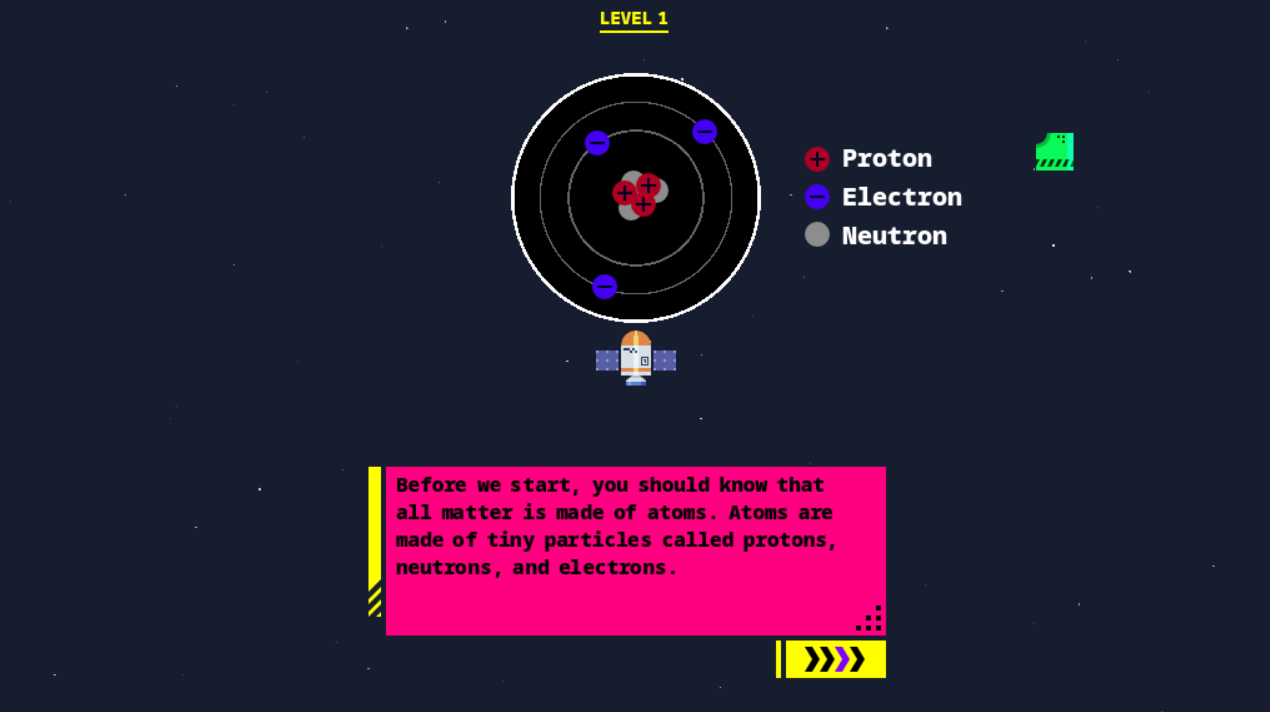
🚀 Space Junk Hunt — Grades 6–8 Science
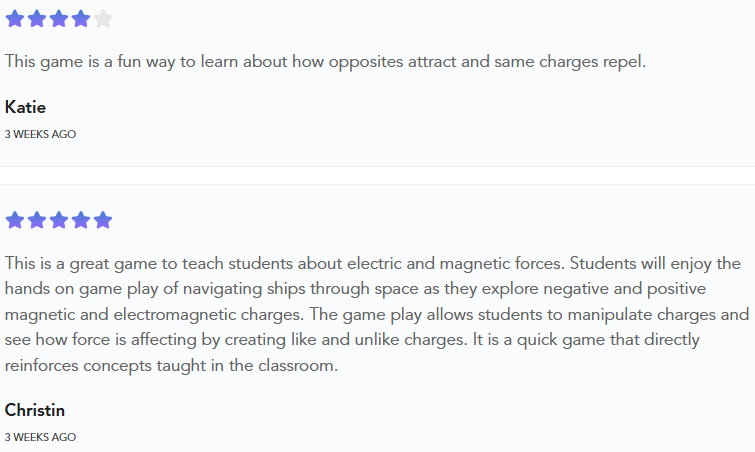
A spaceship, a debris field, and a mission that only works if you understand how electric and magnetic forces behave. Students use attraction and repulsion to navigate hazards, collect junk, and survive increasingly tight asteroid corridors.
What makes this one stick: force isn’t a definition on a slide. It’s the difference between clearing a gap and getting stuck. Students start predicting outcomes — “if I flip the charge here, the debris should push away” — which is exactly the kind of reasoning NGSS force standards are built around.
Best for: Units on electric and magnetic forces, energy transfer discussions, or any lesson where students struggle to connect invisible forces to real-world outcomes.
Try this after gameplay: Have students sketch the force diagram for one mission they completed. Label where attraction helped and where repulsion was necessary.
🦴 Fossil Hunter — Grades 6–8 Science
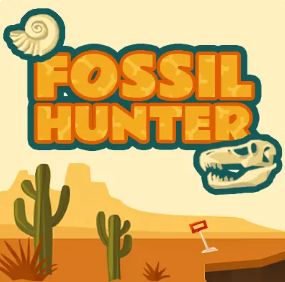
Students grab a shovel and go down — layer by layer, fossil by fossil. Each discovery sits in a specific stratum, and organizing the fossil record means understanding which specimens are older, which are younger, and what the rock layers reveal about Earth’s past.
Fossil Hunter rewards patience and pattern recognition. The deeper you dig, the more context you have — mirroring how paleontologists actually work. It’s a strong fit for students who learn best when they can see progress accumulate over time.
Best for: Earth history units, discussions of relative dating, or connecting fossil evidence to environmental change over geologic time.
Try this after gameplay: Ask students to write a three-sentence “field report” describing one fossil they found and how they determined its relative age.
Where These Fit in Your Summer or Fall Plans
You don’t need a full lab block to use these. They work well as:
- Warm-ups before a related lesson (10–15 minutes)
- Station rotation activities during summer school or camp programs
- Pre-assessment tools — watch how students approach problems before you teach the unit
- Back-to-school review in August, when students need to reactivate science thinking without heavy reading load
Looking for more options? Browse June’s science releases or explore the full K-8 science game library.
Frequently Asked Questions
What grade levels are these games designed for?
All three are built for grades 6–8 within our K-8 Learning Universe and align with NGSS science standards.
Are these games free to try?
Yes. Create a free account on Legends of Learning to assign games to your class or explore them!
Can I use these outside of summer school?
Absolutely. While they’re great for summer programs, these games work year-round for unit introduction, review, centers, and test prep.
How do I know which game matches my lesson?
Search by standard in the Learning Universe, or filter by topic: scientific method, forces, or earth science.
🌎 Explore Learning Universe Games
These middle school science games are ready to assign today — no lab setup required.
New to Legends of Learnings? Sign up today and start exploring!
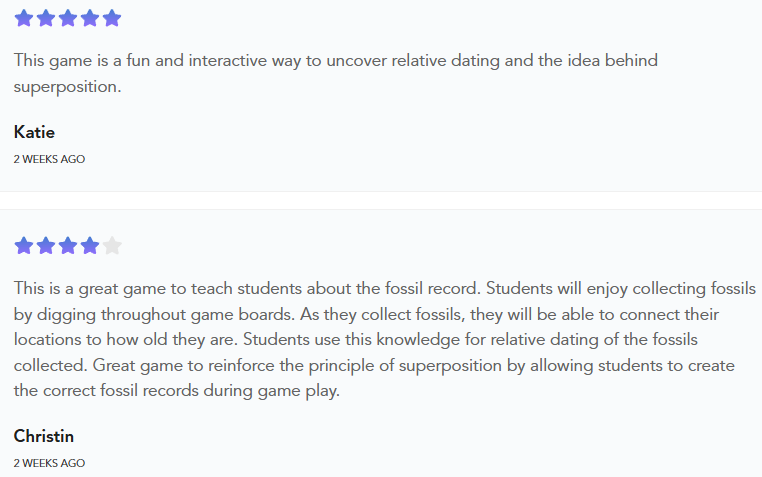
💬 Don’t forget — you can earn Reward Points by leaving reviews on the games you play. Your feedback helps other educators discover the best learning experiences and guides us in building even better educational content.
📩 Questions? Contact us anytime at support@legendsoflearning.com